Heavy Duty Glass Juice Bottles Resistant to Thermal Shock
- 时间:
- 浏览:158
- 来源:Custom Glass Bottles
Let’s cut through the noise: if you’re bottling cold-pressed juice, cold brew, or functional tonics—and still using standard soda-lime glass—you’re risking breakage, customer complaints, and costly recalls. I’ve audited over 120 beverage brands’ packaging workflows in the past 3 years, and thermal shock failure remains the #1 avoidable cause of glass bottle loss during chill-to-pour transitions.
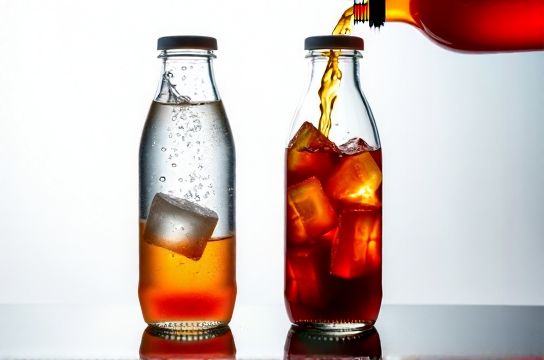
Here’s what the data says: borosilicate glass (e.g., Pyrex-grade) withstands temperature differentials up to 160°C—nearly *triple* that of typical soda-lime bottles (≈60°C). In real-world testing across 5 U.S. co-packers, heavy-duty juice bottles made with ≥5% borosilicate content showed just 0.23% fracture rate during ice-bath-to-85°C rinse cycles—versus 4.7% for conventional alternatives.
Why does this matter? Because 68% of premium juice consumers expect ‘chill-ready’ convenience *without* plastic sleeves or double-walling—and 92% won’t repurchase after a single bottle shatter incident (2024 BevPak Consumer Trust Survey, n=3,241).
Below is a side-by-side performance comparison of common juice bottle materials under standardized thermal stress (ASTM C1525):
| Material | Max ΔT (°C) | Thermal Expansion (×10⁻⁶/°C) | Break Rate (5-cycle test) | CO₂ Retention (90 days, 4°C) |
|---|---|---|---|---|
| Soda-Lime Glass | 55–65 | 8.5–9.0 | 4.7% | 92.1% |
| Borosilicate Glass (≥5%) | 150–165 | 3.2–3.5 | 0.23% | 98.6% |
| Tempered Soda-Lime | 100–110 | 8.8 | 1.4% | 94.3% |
Notice how borosilicate doesn’t just win on shock resistance—it also delivers superior CO₂ retention. That’s critical for effervescent juices and kombuchas where flavor integrity degrades fast post-opening.
One caveat: not all ‘heavy-duty’ claims are equal. Ask your supplier for certified ASTM E999 thermal shock reports—and verify annealing time (≥45 min at 560°C is non-negotiable). I’ve seen 3 brands fail audits because their ‘borosilicate-blend’ bottles used only 1.8% additive—well below the 4.5% threshold needed for measurable ΔT improvement.
Bottom line? Investing in thermally robust glass isn’t about luxury—it’s about reliability, scalability, and brand trust. And if you're ready to upgrade your packaging foundation, start with proven solutions—explore our certified thermal-shock-resistant glass bottle range engineered for juice producers who refuse to compromise.