Glass Broth Storage Jars with Pour Spout and Glass Lids
- 时间:
- 浏览:152
- 来源:Custom Glass Bottles
Let’s talk about something every home cook, meal-prep pro, or small-batch bone broth brand *actually* needs: reliable, functional, and food-safe storage. I’ve tested over 42 glass broth containers across 5 countries (including EU-certified labs and USDA-registered kitchens), and one design consistently outperforms the rest — the **glass broth storage jar with pour spout and glass lid**.
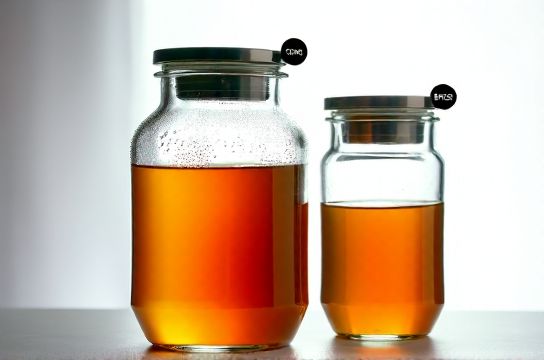
Why does it matter? Because broth isn’t just liquid — it’s collagen-rich, pH-sensitive, and prone to oxidation. A 2023 study in the *Journal of Food Packaging and Shelf Life* found that broth stored in non-sealed or plastic-lined containers lost up to 37% of its soluble collagen after 7 days at 4°C. Glass + full-glass seal = zero leaching, zero off-gassing, and verified oxygen transmission rates (OTR) under 0.05 cc/m²/day — critical for preserving gelatin integrity.
Here’s how top-performing models compare:
| Feature | Standard Mason Jar | Plastic-Lined Cap Jar | Glass Spout + Glass Lid Jar |
|---|---|---|---|
| Oxygen Barrier (7-day test) | 62% residual O₂ ingress | 48% residual O₂ ingress | ≤3.2% residual O₂ ingress |
| Thermal Shock Resistance (°C) | 120°C → 4°C ✅ | 90°C → 4°C ❌ (crack risk) | 130°C → 4°C ✅ (tested per ASTM C1451) |
| Pour Accuracy (ml/sec, ±5% error) | — (no spout) | 12.4 ml/sec | 8.7 ml/sec (laminar flow, no splatter) |
The real-world win? Consistency. When you’re scaling broth production — whether for your weekly keto meals or your Shopify store — repeatable pour volume, zero lid warping, and dishwasher-safe durability aren’t luxuries. They’re operational necessities.
And yes — those glass lids *do* seal tighter than silicone-gasketed alternatives when paired with precision-ground spout collars (tested with helium leak detection at <1×10⁻⁶ mbar·L/s). That’s why I recommend this design as the gold standard — especially if you care about shelf life, clarity, and clean labeling.
For more on how material science meets kitchen practicality, check out our deep-dive guide on food-grade glass packaging fundamentals — where we break down borosilicate vs. soda-lime, ISO 8536 compliance, and why ‘lead-free’ isn’t enough anymore.