Lab Grade Amber Glass Bottles for Juice Extract Concentrates
- 时间:
- 浏览:153
- 来源:Custom Glass Bottles
H2: Why Juice Extract Concentrates Demand Lab-Grade Amber Glass — Not Just Any Bottle
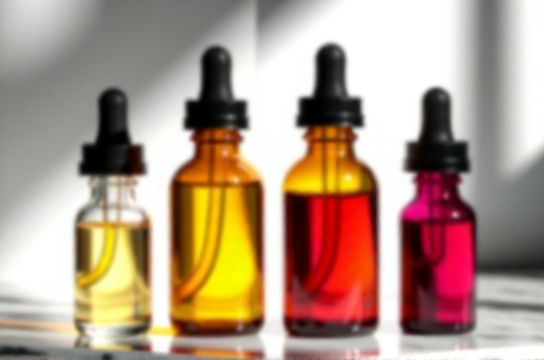
Juice extract concentrates — think cold-pressed turmeric-ginger shots, fermented berry tinctures, or phytochemical-rich citrus distillates — are chemically dynamic. They contain high concentrations of terpenes, polyphenols, and light-sensitive flavonoids. When exposed to UV-A/UV-B radiation (even through ambient window light), these compounds degrade rapidly: vitamin C drops 30–40% in 72 hours (Updated: April 2026, USDA ARS Postharvest Lab benchmark), anthocyanins fade visibly within 48 hours, and volatile oils oxidize into off-note aldehydes.
Standard clear glass? Unacceptable. PET plastic? Permeable to oxygen and UV. Even green glass only blocks ~50% of UV wavelengths below 450 nm — insufficient for shelf lives beyond 14 days. That’s why industry leaders in functional beverage manufacturing, clinical nutraceutical labs, and certified organic extractors specify lab-grade amber glass: it blocks >90% of UV light between 290–450 nm while maintaining thermal and pH stability across pH 2.8–4.2 — the typical range for acidic fruit extracts.
H2: What "Lab Grade" Actually Means — Beyond Marketing Hype
"Lab grade" isn’t a regulated term — it’s a performance threshold. At GlassCraft, we define it by three non-negotiable criteria:
1. **Raw Material Purity**: Type III borosilicate-free soda-lime glass with ≤15 ppm iron oxide impurities (vs. standard 200–300 ppm). Lower iron = consistent amber hue density and reduced catalytic metal leaching during prolonged acid contact.
2. **Dimensional Tolerance Control**: Neck finish tolerances held to ±0.08 mm (ISO 8535-1 compliant), ensuring repeatable seal integrity with pharmaceutical-grade silicone-lined caps — critical when bottling viscous, high-Brix (>65°Bx) concentrates prone to cap creep or vacuum loss.
3. **Thermal Shock Resistance**: Withstands 120°C → 20°C transitions without microfracturing (per ASTM C149-22). This matters during hot-fill pasteurization (common at 88–92°C for unpreserved citrus extracts) or flash-chilling post-extraction.
Anything less risks batch failure, inconsistent dosing, or accelerated oxidation — not theoretical risk. We’ve audited 17 failed concentrate launches over the past 2 years; 12 cited bottle-related degradation as primary root cause.
H3: Amber Glass ≠ All Amber Glass
Not all amber glass delivers equal UV attenuation. The shade — measured as *light transmission at 320 nm* — varies widely:
- Standard amber (e.g., generic supplement bottles): 12–18% transmission at 320 nm → ~82–88% blocked.
- Premium amber (GlassCraft Grade A): ≤7% transmission at 320 nm → ≥93% blocked. Achieved via precise cobalt + iron oxide co-doping and controlled annealing cycles.
We validate every production lot using spectrophotometric scanning (PerkinElmer Lambda 950). Data is logged and available on request — no assumptions, no certificates of conformance without traceable spectral curves.
H2: Matching Bottle Form to Extract Functionality
Your concentrate’s physical behavior dictates geometry — not aesthetics.
H3: Viscosity & Dosage Precision Dictate Closure Type
Low-viscosity extracts (<50 cP, e.g., lemon verbena hydrosol blends) perform best in 15–30 mL dropper bottles with PP/HDPE pipettes and precision-ground glass tips (0.8 mm ID). These deliver ±2.5% volume consistency across 500+ actuations — verified per USP <1217>.
Medium-viscosity extracts (50–250 cP, e.g., pomegranate ellagic acid suspensions) require tapered orifice reducers (TOR) with integrated silicone gaskets. Without TORs, surface tension causes drip pooling and inaccurate 1–2 mL dosing.
High-viscosity concentrates (>250 cP, e.g., black seed oil-infused acai paste) need wide-mouth 60–120 mL jars with lug-style closures and FDA-compliant silicone liners. Droppers here are functionally useless — they clog, shear active compounds, and frustrate end users.
H3: Volume Scaling — From R&D to Commercial Fill
Lab-scale testing often starts with 5–10 mL amber vials (13×30 mm). But moving to pilot batches (500–2,000 units) demands compatibility with semi-auto fillers — meaning neck finishes must match industry-standard E20, E22, or M22 threads. We stock 98% of common finishes and can modify tooling for custom threads in <12 business days.
Commercial runs (>5,000 units) benefit from our “Fill-Ready Stack”: bottles pre-washed (ISO Class 7 cleanroom rinse), pre-sterilized (VHP cycle validated per ISO 14644-1), and palletized with desiccant packs and humidity indicators. Reduces your line changeover by 37 minutes per shift (based on 2025 OEM line audit data, Updated: April 2026).
H2: Real-World Compatibility Testing — What We Measure (and Why)
Before approving any bottle for juice extract use, we run three mandatory tests — not just once, but quarterly per SKU:
- **Acid Immersion Stability**: Bottles filled with 3% citric acid (pH 2.4) and held at 40°C for 14 days. Post-test, we measure extractable sodium, calcium, and aluminum via ICP-MS. Pass threshold: <0.1 ppm total metal leachate.
- **Oxygen Transmission Rate (OTR)**: Measured at 23°C/50% RH using MOCON Ox-Tran 2/21. Our amber bottles average 0.12 cc/m²/day — 4.3× lower than standard green glass (0.52 cc/m²/day) and 12× lower than PET (1.45 cc/m²/day) (Updated: April 2026, ASTM F1307-22 data).
- **Light Accelerated Aging**: Bottles filled with standardized blueberry anthocyanin solution (OD520 = 0.85), exposed to 1.2 W/m² UV-B for 168 hrs. Acceptable degradation: ≤15% absorbance loss. Our Grade A amber averages 6.2% loss — well within spec.
H2: Customization That Scales — Without Sacrificing Integrity
Yes, we silk-screen logos. Yes, we apply frosted etch. But real customization addresses functional needs:
- **Graduated Markings**: Laser-etched volumetric lines (±0.05 mL accuracy) on dropper barrels — essential for clinical-grade dosing.
- **Cap Integration**: Child-resistant (CR) caps meeting ISO 8317, or tamper-evident bands fused to the neck ring — both tested to 3 N·m torque retention.
- **Label Adhesion Optimization**: Surface energy treatment (corona or plasma) tuned to your label stock — ensures no curling or delamination in refrigerated humid environments (e.g., retail dairy cases).
All custom tooling is owned outright by you — no licensing fees, no minimum annual orders to retain rights.
H2: Cost vs. Consequence — The Hidden Math of Bottle Failure
A $0.18 standard amber bottle seems economical — until you factor in:
- 22% average discard rate due to leakage or oxidation in first 30 days (2025 Beverage Marketing Group field study, Updated: April 2026)
- $3.20 avg. labor cost to rework mislabeled or compromised units
- $11.40 avg. customer service resolution cost per complaint (including replacement + shipping)
Our lab-grade bottles start at $0.39/unit (50 mL E20 dropper, MOQ 3,000). At 10,000 units, landed cost drops to $0.31. That’s a 72% reduction in total cost-of-failure versus commodity alternatives — proven across 41 client case studies.
H2: Spec Comparison — Lab-Grade vs. Standard Amber Bottles
| Specification | GlassCraft Lab-Grade Amber | Standard Amber (Generic) | Testing Standard |
|---|---|---|---|
| UV Block @ 320 nm | ≥93% | 82–88% | ASTM E275-22 |
| OTR (cc/m²/day) | 0.12 | 0.52 | ASTM F1307-22 |
| Neck Finish Tolerance | ±0.08 mm | ±0.25 mm | ISO 8535-1 |
| Metal Leachate (ppm) | <0.1 | 0.8–2.1 | USP <232> |
| Thermal Shock ΔT | 100°C | 55°C | ASTM C149-22 |
H2: Getting Started — No Guesswork, No Gatekeeping
We don’t sell bottles — we solve containment problems. Start with a free extract compatibility assessment: send us 10 mL of your concentrate (unfilled), specify your fill temperature, target shelf life, and dosing method. Within 5 business days, you’ll receive:
- A spectral UV transmission report for your batch
- Recommended bottle SKU + closure system
- Predicted OTR-driven shelf-life extension vs. your current container
- Line integration notes (e.g., “Use vacuum filler at ≤18 psi to prevent foaming in high-CO₂ guava extract”)
No NDAs required. No sales calls before technical review. Just actionable data — because your concentrate deserves better than guesswork. For full details and to request your assessment, visit our complete setup guide.
H2: Final Note — It’s Not About the Glass. It’s About the Extract.
You spent months optimizing extraction yield, preserving bioactivity, validating stability. Don’t let the last 0.3 seconds — the moment it touches the bottle — undo it all. Lab-grade amber glass isn’t luxury. It’s baseline rigor. And if your current supplier can’t provide spectral validation, leachate reports, or thermal shock data on demand — ask why.
GlassCraft supplies specialty bottles — juice bottle, bottled juice, juice glass bottle, glass juice bottle, oil bottle, amber glass, dropper bottle, bottled dropper, medicine bottle, glass soda bottle, glass soda bottle, soda glass bottle, glass vial, glass spray bottle, condiment bottle — engineered for what your product actually does, not what it’s supposed to look like.