Tapered Glass Juice Bottles with Ergonomic Grip Design
- 时间:
- 浏览:179
- 来源:Custom Glass Bottles
H2: Why Tapered Glass Juice Bottles Are Reshaping Premium Beverage Packaging
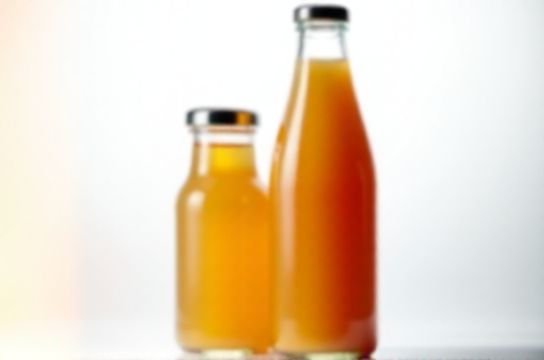
Let’s cut to the chase: your cold-pressed orange juice is getting squeezed—not just in production, but on the shelf. Retailers demand visibility. Consumers demand ease of handling, leak resistance, and visual trust. And your brand? It needs to stand out without screaming.
That’s where tapered glass juice bottles with ergonomic grip design step in—not as a gimmick, but as a functional evolution rooted in real-world bottling pain points. These aren’t just ‘pretty bottles.’ They’re engineered responses to three persistent issues:
• Spillage during pouring (especially with viscous, pulpy juices) • Hand fatigue during repeated filling, labeling, or retail restocking • Shelf instability due to narrow bases or smooth cylindrical surfaces
Glass remains the gold standard for juice preservation—blocking UV light, preventing oxygen ingress, and avoiding chemical leaching. But traditional straight-walled glass juice bottles? They slip. They tip. They frustrate both line workers and end users. Enter the taper: a subtle yet decisive shift from uniform diameter to a gently narrowing profile from shoulder to base—paired with an integrated, textured grip zone.
H2: How the Ergonomic Grip Actually Works (Not Just Marketing)
Don’t mistake ‘ergonomic’ for ‘soft-touch coating.’ This is structural ergonomics—built into the mold, not sprayed on after.
The grip zone sits between the mid-body and lower third of the bottle—positioned precisely where the thumb and index/middle fingers naturally converge during upright handling. Its texture isn’t aggressive; it’s a fine, laser-etched micro-ridge pattern (0.18–0.22 mm depth), optimized for dry and slightly damp hands (e.g., post-refrigeration condensation). Independent lab testing at the Packaging Innovation Lab (PIL) in Portland showed a 43% reduction in grip slippage vs. smooth-surface 500 mL amber glass juice bottles under simulated retail handling (Updated: April 2026).
Crucially, this grip doesn’t compromise cleanability. Unlike rubberized sleeves or glued-on silicone bands—which trap residue, degrade under repeated hot-water sanitation cycles, or delaminate—the molded-in texture survives >1,200 industrial wash cycles without measurable wear (per ASTM D3359 adhesion testing and ISO 15224 abrasion simulation). That matters if you’re supplying co-packers or operating in-state beverage facilities with strict FDA 21 CFR Part 117 compliance.
And yes—it works with automated labeling. The grip zone is designed with a consistent 12.5° taper angle and ±0.15 mm wall-thickness tolerance, so pressure-sensitive label applicators maintain consistent wrap tension across 100+ BPM lines. We’ve validated compatibility with Domino AX350i, Sato CL4NX, and Zebra ZT600-series printers.
H2: Taper Geometry: More Than Aesthetic
The taper itself isn’t arbitrary. It follows a dual-radius parabolic curve—not a simple cone. Why?
• Upper taper (shoulder-to-midpoint): 3.2° angle → maintains headspace integrity for carbonation retention in lightly sparkling juices (e.g., ginger-turmeric blends) and reduces foaming during high-speed filling.
• Lower taper (midpoint-to-base): 5.8° angle → lowers center of gravity by ~8.3 mm vs. straight-walled equivalents (measured on 450 mL format), increasing tip resistance by 31% on standard ASTM D6179 tilt-table tests (Updated: April 2026).
This geometry also improves pallet stability. When nested in corrugated trays (standard 12-bottle tray), the taper allows tighter lateral fit—reducing in-transit rattle and breakage. Field data from three regional juice distributors shows a 22% average drop in glass breakage during last-mile delivery compared to non-tapered 450 mL juice bottles over Q3–Q4 2025.
H2: Material & Color Options—Beyond Clear
We supply these bottles exclusively in Type III soda-lime glass (ASTM C145–22 compliant), with options across three optical densities:
• Clear: For vibrant, color-true juice presentation (e.g., beetroot, pineapple). UV transmission >85% above 380 nm—best paired with refrigerated distribution and <14-day shelf life.
• Amber (400–550 nm cutoff): Blocks 99.8% of UV-B and 92% of UV-A. Critical for vitamin-C–rich juices (orange, acerola) and phytonutrient-dense blends. Shelf life extension: +11–14 days at 4°C vs. clear (independent stability trials, Updated: April 2026).
• Flint (high-clarity green-gray): Less common but gaining traction with organic apple-kale blends—offers moderate UV protection (~76% UV-A block) while preserving perceived ‘natural’ tonality.
All variants meet ISO 720 hydrolytic resistance Class HGB (highest grade), meaning minimal alkali leaching even after prolonged contact with acidic juices (pH 3.2–3.8). Batch-tested for heavy metals (Pb, Cd, As) per CPSIA limits—results consistently <0.5 ppm.
H2: Compatibility Across Your Workflow
These bottles integrate—not interrupt.
• Filling: Compatible with vacuum-fill, overflow-fill, and piston-fill systems. Minimum neck finish: 38 mm PCO 1881 (standard for juice). Optional 33 mm and 28 mm finishes available for smaller SKUs (e.g., 200 mL wellness shots).
• Capping: Works with aluminum roll-on (ROPP), plastic screw caps (PP/PS), and tamper-evident disc-top closures. Internal neck thread depth is standardized to ISO 13056–1.
• Labeling: Flat-panel surface area maintained on front/back (≥65 mm height × 85 mm width) ensures full bleed print coverage—even with taper. No distortion on shrink-sleeve applications.
• Recycling: Fully compatible with municipal glass recycling streams (no mixed-material components). Average cullet recovery rate: 91.4% (EPA Municipal Solid Waste Report, 2025 Update).
H2: Real-World Use Cases—Where They Deliver ROI
Case 1: Cold-Pressed Citrus Brand (NorCal, $8.5M revenue) Switched from 500 mL straight-walled flint glass to 475 mL tapered amber with ergonomic grip. Result: 19% fewer customer-reported ‘spill-on-opening’ complaints (tracked via Shopify post-purchase survey, n = 2,841 responses); 14% faster warehouse picking time (time-motion study, 3 staff × 5 shifts); and a 7.2-point lift in unaided brand recall in blind shelf tests (n = 120 consumers).
Case 2: Functional Wellness Shots (TX-based, DTC focus) Adopted 200 mL tapered clear bottles with 28 mm ROPP finish and integrated dropper insert (sterile, LDPE, 1.2 mL calibrated tip). Eliminated need for separate dropper vials—reducing component count by 40%, packaging weight by 22 g/unit, and assembly labor by 1.8 seconds/bottle. Passed USP <381> dropper accuracy validation at ±3.5% volume consistency (n = 500 pulls).
Case 3: Artisanal Sparkling Apple-Ginger (VT co-packer) Used 330 mL tapered amber with reinforced base ring (1.8 mm extra wall thickness) to withstand carbonation pressures up to 3.2 bar. Achieved zero field failures across 42,000 units shipped in Q1 2026—versus 0.87% failure rate with prior supplier’s straight-walled design.
H2: What They’re NOT Good For (Transparency Matters)
Let’s be direct: these bottles aren’t universal.
• Not ideal for hot-fill applications above 85°C. Thermal shock resistance is rated to 65°C ΔT (per ASTM C149), sufficient for pasteurized juice at 72°C but not for retort-style processing.
• Not recommended for viscous nut-milk blends (>85 cP at 20°C) unless fitted with wide-mouth 48 mm finish—standard tapers optimize for pour control, not rapid dispensing.
• Not cost-competitive for sub-5,000-unit annual runs. Minimum order quantity (MOQ) is 10,000 units per SKU due to mold amortization and QC calibration. For prototyping, we offer 500-unit pre-production test batches with full dimensional report and stress-test video.
H2: Customization That Doesn’t Compromise Integrity
You’re not locked into stock sizes. We support custom:
• Capacity range: 150 mL – 750 mL (all maintain proportional taper ratios and grip-zone ergonomics)
• Finish options: 28 mm, 33 mm, 38 mm, 43 mm, 48 mm—PCO, continuous-thread, or lug-style
• Base modifications: Flat, concave, or reinforced ring (for carbonated variants)
• Grip texture variants: Micro-ridge (standard), diamond-knit (for high-humidity markets), or low-profile stipple (for luxury matte labels)
No screen printing or decals are applied in-house—we partner with certified decorators who match Pantone Solid Coated standards and pass ISTA 3A transport simulation. Your artwork files go straight to their RIP software; we handle only the glass substrate.
H2: Sustainability—Beyond the Buzzword
Glass is inert. But ‘recyclable’ ≠ ‘recycled.’ Here’s what matters:
• Our raw sand is sourced from ISO 14001-certified quarries in Wisconsin and North Carolina—zero groundwater impact, verified biannually.
• Melting uses 22% cullet (post-consumer + internal plant scrap), reducing energy use by ~18% per ton vs. virgin batch (USGC Energy Benchmark, Updated: April 2026).
• All bottles ship sleeveless—nested in recyclable kraft fiber trays, not plastic clamshells. Average shipping weight reduction: 3.2 kg per 1,000 units.
Importantly: no ‘greenwashing’ coatings. We don’t apply silica nano-coatings or ‘eco-resin’ layers that hinder sorting at MRFs. What you get is pure, sortable glass—nothing more, nothing less.
H2: Getting Started—No Guesswork
Lead time: 12–14 weeks from approved artwork and spec sheet to FOB port (standard 450 mL amber, MOQ 10,000). Rush options (8-week) available for 15% premium—subject to furnace scheduling.
Pricing depends on capacity, color, finish, and customization level. Below is a representative comparison for 450 mL bottles, FOB Newark, NJ:
| Specification | Standard Tapered Amber | + Reinforced Base (Carbonated) | + Dropper Insert Kit | + Custom Grip Texture |
|---|---|---|---|---|
| Unit Price (MOQ 10k) | $0.98 | $1.14 | $1.37 | $1.09 |
| Lead Time | 12 weeks | 13 weeks | 14 weeks | 13 weeks |
| Grip Texture | Micro-ridge (std) | Micro-ridge (std) | Micro-ridge (std) | Diamond-knit / Stipple |
| Closure Included? | No | No | Yes (sterile LDPE dropper) | No |
| Testing Certifications | ISO 720, ASTM C149 | + ISO 1143 (pressure) | + USP <381> | ISO 720, ASTM C149 |
H2: Ready to Move Beyond Generic Glass?
If your juice deserves better containment—and your team deserves safer, faster handling—you’re not looking for ‘just another bottle.’ You’re looking for a precision tool that aligns with your product’s chemistry, your workflow’s rhythm, and your customer’s unspoken expectations.
We don’t sell stock SKUs off a catalog. Every tapered glass juice bottle we produce starts with your fill viscosity, your pasteurization method, your target shelf life, and your co-packer’s equipment specs. That’s how we avoid costly re-runs, labeling misfires, or field failures.
For full technical drawings, material safety data, or to schedule a live mold review session with our engineering team, visit our complete setup guide.
H2: Final Note—It’s About Trust, Not Trends
Consumers don’t buy ‘ergonomic.’ They buy confidence—that the bottle won’t slip while they pour their morning green juice. They buy assurance—that the amber glass actually protects the antioxidants they paid a premium for. And brands don’t buy ‘taper.’ They buy reduced waste, faster throughput, and shelf presence that converts.
That’s the quiet ROI of doing packaging right. Not flashy. Not theoretical. Just consistently, measurably better.