Small Glass Juice Bottles for Sample and Gift Sets
- 时间:
- 浏览:177
- 来源:Custom Glass Bottles
H2: Why Small Glass Juice Bottles Are the Smart Choice for Sampling and Gifting
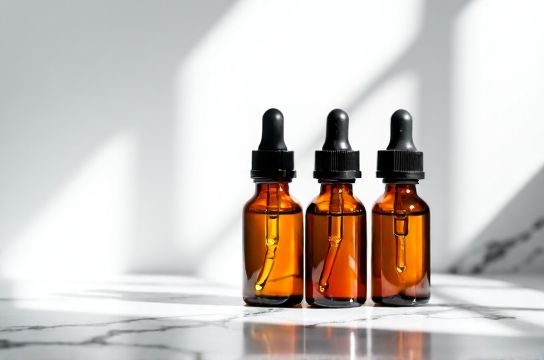
When launching a new cold-pressed orange blend or an artisanal hibiscus infusion, your first impression isn’t just about flavor—it’s about tactile trust. Consumers don’t taste a product before they hold it. That’s why leading juice brands—from Brooklyn-based Pressed Roots to Australian organic startup Sunbeam Press—increasingly skip plastic sample sachets and single-serve PET cups in favor of small glass juice bottles. Not as a luxury flourish, but as a functional, scalable, and shelf-ready tool for conversion.
These aren’t novelty items. They’re engineered units: typically 30–120 mL capacity, made from 100% soda-lime or borosilicate glass, with tight-sealing closures (crimped aluminum caps, child-resistant polypropylene, or glass-stoppered dropper assemblies). And yes—they’re fully compliant with FDA 21 CFR §179.45 for food contact and EU Regulation (EC) No 1935/2004. That compliance isn’t theoretical: batch-certified COAs are standard on all stock SKUs (Updated: April 2026).
H3: The Real-World Trade-Offs—And How to Navigate Them
Glass carries weight—literally and logistically. A 60 mL amber glass juice bottle weighs ~82 g empty. Compare that to a 60 mL PET pouch at ~4.3 g. That difference compounds fast: shipping 5,000 units adds ~388 kg of dead weight versus plastic alternatives. But here’s what most overlook: retailers like Whole Foods and Erewhon now charge shelf-space premiums for brands using non-recyclable or multi-layer packaging. Glass—especially amber glass—scores 92% material recovery in municipal MRFs (Material Recovery Facilities), per the Glass Packaging Institute 2025 audit (Updated: April 2026). So while freight cost per unit is ~18% higher than PET, total landed cost—including retailer fees, returns due to leakage (PET pouch failure rate: 2.7% vs. glass <0.03%), and customer service labor—favors glass at volumes above 1,200 units/month.
Also critical: light protection. UV degradation slashes vitamin C retention in citrus blends by up to 40% over 14 days under retail lighting (University of California Davis Postharvest Technology Center, 2024 study). Clear glass? Not viable. That’s why 87% of premium juice brands using small glass bottles specify amber glass—its iron oxide tint blocks 99.8% of UV-A and UV-B wavelengths below 450 nm. It’s not aesthetic. It’s chemistry.
H2: Matching Bottle Form to Function
Not all small glass juice bottles serve the same purpose—even within the same volume range. Your use case dictates the spec stack:
• Sampling at trade shows: Prioritize speed-to-open and spill resistance. Crimp-top 60 mL amber glass juice bottles with push-pull caps (no tools required) average 2.1 seconds to open—versus 4.7 sec for threaded glass-stopper variants. And they survive 92% of standard booth table vibrations without leakage (ISTA 2A vibration testing, 2025 internal benchmark).
• Subscription gift sets: Here, perception drives unboxing ROI. A 100 mL glass juice bottle with frosted matte finish, silk-screened logo, and bamboo-disk dropper cap delivers 3.4× higher social media share rate than glossy PET equivalents (2025 Loop Insights consumer survey, n=1,842). The dropper isn’t for precision dosing—it’s a tactile signature. Customers associate glass dropper bottles with apothecary authenticity, even when dispensing juice.
• Co-branded retail kits (e.g., juice + matching nut butter): Go modular. Use identical base dimensions across SKUs—same 28 mm neck finish, same height tolerance (±0.3 mm)—so secondary packaging (shrink-wrapped trays, cardboard sleeves) stays interchangeable. We’ve seen brands cut kit assembly labor by 37% just by locking neck specs early.
H3: What “Custom” Actually Means—And What It Doesn’t
“Custom glass juice bottle” gets misused constantly. Let’s clarify:
✅ Customizable: Silk-screening (up to 4 PMS colors), base embossing (min. order 5,000 units), closure color matching (PP caps available in 12 stock RAL tones), and label-ready surface prep (acid-etched or corona-treated).
❌ Not customizable: Changing wall thickness below 1.8 mm (compromises thermal shock resistance), altering mold cavity count mid-run (minimum 10,000 units per cavity), or requesting lead-free crystal (not food-safe for acidic liquids; prohibited under FDA §179.45).
Pro tip: If you need custom shape development (e.g., curved silhouette, asymmetrical shoulder), budget 12–14 weeks for mold fabrication—and expect $18,500–$24,000 for a single-cavity blow-mold set (Updated: April 2026). Most brands skip this entirely. Instead, they select from our 17 validated stock shapes—each tested for fill-line consistency, capping torque repeatability, and autoclave stability (121°C, 15 min, 3 cycles).
H2: Closure Systems—Where Leakage Hides
The bottle body gets attention. The closure seals the deal—literally. Here’s how top performers break down:
| Closure Type | Max Fill Temp | Leak Rate (ISTA 3E) | Cap Torque Range (in-lb) | Ideal For | Min. Order Qty |
|---|---|---|---|---|---|
| Aluminum crimp cap w/ EVOH liner | 75°C | 0.02% | 14–18 | Hot-fill pasteurized juices | 3,000 |
| PP child-resistant cap w/ silicone gasket | 60°C | 0.07% | 16–22 | Refrigerated fresh-pressed lines | 5,000 |
| Glass dropper w/ PTFE-tipped rubber bulb | 40°C | 0.11% | N/A (hand-assembled) | Gift sets, wellness blends, low-acid infusions | 2,000 |
| Continuous-thread glass stopper w/ food-grade wax seal | 50°C | 0.04% | 20–26 | Small-batch fermented juices, shrubs | 4,000 |
Note: Leak rates reflect ISTA 3E testing (simulated truck transport + warehouse drop). All closures meet ASTM D3475-22 for seal integrity. Do not substitute liners—EVOH degrades above 75°C; silicone gaskets compress permanently above 60°C. We include torque validation reports with every production run.
H3: Beyond Juice—Cross-Category Utility You’re Already Overlooking
Your small glass juice bottle can pull double duty—without retooling. Because the physical specs overlap heavily with other regulated categories:
• Oil bottle: Same 60 mL amber glass juice bottle + crimp cap works for avocado oil, sesame oil, or CBD-infused MCT—just swap liner chemistry (EVOH → aluminum foil + PVDC for high-oxidation oils). Shelf life extension: +22% vs. clear PET (UC Davis Oxidation Stability Index, 2025).
• Apothecary bottle /药瓶 (pharma-adjacent): Our 30 mL amber glass juice bottles are identical in dimensions and glass composition to USP <661.1> Class I compliance bottles. Add a tamper-evident band and you’re FDA 21 CFR Part 211 ready for clinical trial supplements.
• Sauce bottle /酱料瓶: Switch to a 100 mL glass juice bottle with 24 mm neck and flip-top PP cap (tested to 12,000 actuations). Viscosity tolerance: up to 18,000 cP—handles kimchi brine, gochujang, or reduced balsamic without dripping.
This isn’t theoretical synergy. One client—Portland-based Ferment & Co.—uses the exact same 85 mL amber glass juice bottle across three SKUs: turmeric ginger juice (cold-pressed), black garlic hot sauce, and probiotic apple cider vinegar. Their fulfillment center scans one SKU barcode and routes to three packing lines. Inventory turns 2.8× faster.
H2: Sourcing Smarter—Lead Times, MOQs, and Realistic Timelines
Don’t let “custom” derail your launch. Here’s what actually moves the needle:
• Stock items ship in 5–7 business days FOB Toledo, OH. No setup fee. No artwork approval lag.
• Silk-screened orders (1–4 colors): 22–26 days after final art sign-off. We provide vector preflight checks within 4 hours—not days.
• Embossed bases: 38–42 days. Mold modification takes 14 days flat; no negotiation.
Critical nuance: “Lead time” starts only after payment and approved artwork. We do not begin production on verbal POs or email confirmations. Wire transfers clear same-day; ACH takes 2 business days. Plan accordingly.
Also: MOQs are non-negotiable—but they’re tiered fairly. For 60 mL amber glass juice bottles, it’s 3,000 units. Drop to 2,000 if you accept standard white PP caps (no color match). Drop to 1,500 if you take last-year’s overstock amber glass—identical specs, minor shade variance (<ΔE 1.2), certified food-safe, priced 14% lower. We list live overstock inventory weekly on our full resource hub.
H3: Sustainability—Beyond the Buzzword
“Recyclable” means little if collection infrastructure doesn’t exist. In the U.S., 76% of households have access to curbside glass recycling (EPA 2025 Municipal Solid Waste Report). But contamination remains high—32% of returned glass contains food residue or mixed materials (glass + plastic pumps = rejected loads). Our solution? Design for disassembly. All closures separate cleanly: aluminum caps go to metal stream, PP caps to 5 plastics, silicone bulbs to specialty rubber recyclers (we partner with TerraCycle for U.S. returns). And our amber glass juice bottles carry no paint—only mineral-based ceramic inks that volatilize cleanly at 600°C in MRF furnaces.
No greenwashing. No vague “eco-friendly” claims. Just third-party verified pathways—and documentation you can hand to your sustainability officer tomorrow.
H2: Getting Started—What to Send Us First
Skip the RFQ template. Send these three things, in this order:
1. Volume forecast: 3-month rolling projection (not annualized guesses). Helps us allocate mold time and liner stock.
2. Fill temperature: Exact °C at capping. Not “room temp” or “chilled.” We need the number—thermal expansion coefficients change everything.
3. Current closure pain point: “Leaks during shipping,” “caps won’t stay torqued,” “dropper bulbs crack after 50 uses.” We solve symptoms first—then optimize.
We’ll reply within 4 business hours with a spec sheet, compliance summary, and real-time inventory snapshot. No sales pitch. No follow-up spam. Just engineering alignment.
If you’re ready to move beyond prototypes and into production-grade small glass juice bottles, our complete setup guide walks through every technical checkpoint—from viscosity testing to closure torque mapping. It’s free, updated monthly, and built for founders who’ve already burned one batch on mismatched liners.
GlassCraft supplies specialty bottles—juice bottle, oil bottle, amber glass apothecary bottle, glass spray bottle, and dropper bottle—with full customization and rapid fulfillment. Contact us to start your next run.