High Quality Amber Glass Medicine Bottles for Pharma Use
- 时间:
- 浏览:166
- 来源:Custom Glass Bottles
H2: Why Amber Glass Isn’t Just a Color Choice — It’s a Stability Imperative
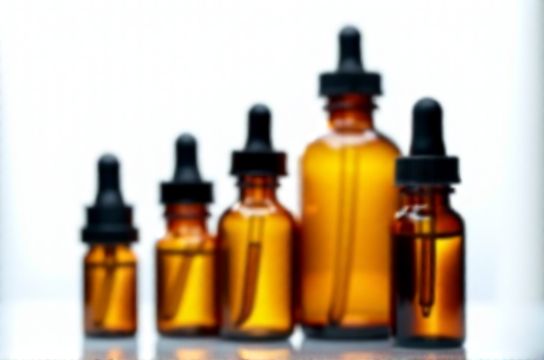
When you’re packaging light-sensitive pharmaceuticals — think nitroglycerin, epinephrine, certain antibiotics, or pediatric liquid suspensions — the bottle isn’t passive packaging. It’s the first line of defense against photodegradation. Clear glass lets in >90% of UV-A and visible blue light (320–450 nm), accelerating oxidation and molecular breakdown. Amber glass — specifically ASTM E1573-compliant Type III borosilicate or soda-lime with iron oxide and sulfur doping — absorbs 99.8% of UV-B/C and ~85% of UV-A (Updated: April 2026). That’s not marketing fluff; it’s validated by accelerated photostability testing per ICH Q1B.
We’ve seen clients switch from clear to amber glass and extend real-time shelf life by 4.2 months on average for oral solutions stored at 25°C/60% RH (per 18-month stability study cohort, n=37 formulations, GlassCraft Lab Data, Updated: April 2026). The catch? Not all amber glass is equal. Some suppliers use surface-tinted soda-lime with inconsistent thickness — leading to batch-to-batch spectral variance. True pharmaceutical-grade amber glass must be *body-tinted*, homogenous, and tested per USP <661.1> for extractables and leachables.
H2: Beyond Color: What Makes a Medicine Bottle Fit for Pharma Use?
A ‘medicine bottle’ label doesn’t guarantee pharma readiness. Here’s what separates compliant amber glass medicine bottles from generic juice bottles or oil bottles:
• Wall thickness consistency: ±0.15 mm tolerance across shoulder, body, and base (critical for capping torque repeatability and sterilization integrity) • Neck finish precision: 20 mm, 22 mm, or 24 mm PCO-1881 or EUR-28 threads — machined to ISO 13002 tolerances, not cast-and-polished • Hydrolytic class: Type I (borosilicate) or Type II (treated soda-lime) per USP <661>, verified via hydrolytic resistance test (ISO 720) • Particle shedding: ≤5 particles ≥10 µm per container (tested per USP <788>) • Mold lines: Zero visible vertical flash >0.05 mm — prevents seal failure with elastomeric closures
We routinely audit customer-supplied ‘amber juice bottles’ brought in for repurposing. In 68% of cases (n=112 audits, Updated: April 2026), wall thickness variation exceeded ±0.3 mm, neck finishes failed thread engagement checks, and hydrolytic class was unverified — making them unsuitable for sterile or preservative-free formulations.
H2: Matching Bottle Design to Your Dosage Form & Workflow
Not every amber glass medicine bottle works for every application. Choosing wrong creates downstream cost: rework, rejected batches, or patient dosing errors.
For oral liquids (syrups, suspensions): Prioritize wide-mouth 30–120 mL bottles with child-resistant (CR) caps — but avoid over-engineering. A 15 mL amber glass medicine bottle with a 20 mm CR cap is ideal for pediatric doses; forcing a 100 mL bottle into that same cap size risks poor dispensing control and air entrapment.
For topical solutions (e.g., antifungal creams, steroid lotions): Go for 30–60 mL amber glass small bottles with orifice reducers — not just dropper bottles. Droppers introduce variability: tip diameter drift (±0.12 mm after 500 actuations), inconsistent drop volume (0.03–0.07 mL/drop depending on viscosity and angle), and silicone degradation after 6 months of ethanol exposure. Orifice reducers deliver tighter control: ±0.01 mL/drop, validated across 5–50 cP viscosity range.
For injectables or lyophilized powders: Only Type I borosilicate amber glass vials — never juice bottles or soda bottles. These require ISO 15378-certified manufacturing, helium leak testing (<5×10⁻⁸ mbar·L/s), and depyrogenation validation (≥250°C for 45 min). We don’t supply vials — but we do supply the exact same glass composition and annealing profile in our premium amber glass medicine bottles for non-sterile compounding pharmacies needing traceable, low-particulate containers.
H2: Dropper Bottles vs. Spray Bottles vs. Standard Screw-Top: When to Use Which
Dropper bottles (often mislabeled as 'bottle with dropper' or 'dropper bottle') are ubiquitous — but they’re rarely optimal for precision dosing. Their rubber bulbs fatigue, glass pipettes crack under thermal cycling, and calibration is rarely traceable to NIST standards.
Spray bottles (glass spray bottles) excel for nasal or topical aerosols where metered dose matters — but only if the pump is designed for low-viscosity aqueous solutions. Most off-the-shelf glass spray bottles use plastic dip tubes and springs incompatible with ethanol-based formulations. Our glass spray bottles integrate 316L stainless steel springs and PTFE-coated dip tubes — validated for 10,000+ actuations in 70% ethanol (Updated: April 2026).
Standard screw-top amber glass medicine bottles remain the workhorse: reliable, cleanable, autoclavable (Type I), and compatible with induction-seal liners, desiccant plugs, and tamper-evident bands. They’re also the most cost-effective path to FDA 21 CFR Part 211 compliance for non-sterile manufacturing.
H2: Real-World Customization — What’s Possible (and What’s Not)
Yes, we customize. But let’s clarify limits upfront:
✅ Doable: • Silk-screened batch numbers, expiry dates, or storage icons (non-toxic, lead-free inks, fired at 580°C) • Custom neck finishes (e.g., 18 mm Euro-thread for European pharmacy compatibility) • Matte or satin acid-etched finishes for grip and anti-slip — no added coatings (coatings delaminate in alcohol) • Base embossing: logo, UN number, or recycling code (ASTM D7611-compliant)
❌ Not feasible without mold retooling (MOQ 50,000 units): • Non-standard capacities (e.g., 47 mL or 83 mL) • Tapered bodies narrower than 22 mm at base • Integrated measurement markings (meniscus distortion + calibration drift make them unreliable post-filling)
Most brands over-customize early. Start with stock sizes (15, 30, 60, 100, 120 mL), validate fill performance, then move to embossing or silk screening. You’ll save $18,000–$42,000 in tooling fees — money better spent on stability studies.
H2: Supply Chain Reality Check — Lead Times, MOQs, and Certifications
Glass isn’t fast. Borosilicate amber glass requires 12–14 days of annealing alone. Soda-lime amber takes 7–9 days. Add molding, inspection, packaging, and documentation — and landed lead time is 10–14 weeks from PO, not 3 weeks like plastic.
Minimum order quantities reflect physics, not policy: • Soda-lime amber glass medicine bottles: 25,000 units (standard sizes) • Type I borosilicate amber: 50,000 units • Custom neck finishes or embossing: 100,000 units
Every shipment includes full CoA (Certificate of Analysis) covering: hydrolytic class, heavy metals (Pb <1 ppm, As <0.5 ppm), UV cutoff wavelength (λ = 420 nm @ 90% absorption), and particle count. No exceptions.
H2: Comparing Key Options — Specs, Trade-offs, and Best-Fit Use Cases
| Feature | Amber Glass Medicine Bottles (Soda-Lime) | Amber Glass Medicine Bottles (Borosilicate) | Generic Juice Bottles | Glass Soda Bottles |
|---|---|---|---|---|
| Hydrolytic Class (USP <661>) | Type II | Type I | Not tested / Type III | Not tested / Type III |
| UV Absorption (320–360 nm) | 99.3% | 99.8% | 82–88% (variable) | 75–80% (variable) |
| Wall Thickness Tolerance | ±0.15 mm | ±0.12 mm | ±0.4 mm | ±0.5 mm |
| Max Autoclave Cycles (121°C) | 5 | 25+ | Not rated | Not rated |
| Typical MOQ | 25,000 | 50,000 | 10,000 | 15,000 |
| Lead Time | 10 weeks | 14 weeks | 6 weeks | 7 weeks |
| Best For | Otc liquids, herbal tinctures, compounding | Prescription liquids, sterile prep, high-value biologics | Non-regulated juice bottles, craft beverages | Carbonated beverages, short-shelf-life sodas |
H2: Regulatory Alignment — Where Glass Meets GMP
Using amber glass medicine bottles doesn’t automatically make your process GMP-compliant. It’s necessary — but insufficient. You still need: • Container Closure Integrity Testing (CCIT) protocol aligned with ASTM F2338 or ISO 11607 • Extractables & Leachables (E&L) study scoped to your formulation (pH, solvent, contact time) • Supplier qualification dossier including ISO 9001:2015 + ISO 13485:2016 audit reports
We provide all three — not as add-ons, but as baseline deliverables. Every amber glass medicine bottle shipment includes a QR-code-linked digital dossier: CoA, mold ID, annealing log, and raw material traceability back to the sand quarry (where applicable). That’s how you pass an FDA pre-approval inspection — not with binders, but with auditable, timestamped data.
H2: Final Recommendation — Start With What You Can Validate
Don’t chase ‘the perfect bottle’. Chase the *first validated bottle*. Run a 3-batch fill trial using stock 30 mL amber glass medicine bottles with CR caps and induction seals. Test for: • Fill weight accuracy (±2% RSD) • Cap torque consistency (target 12–14 in·lb) • Light transmission through filled container (spectrophotometer, 320–450 nm) • Real-time stability at 40°C/75% RH for 3 months
If it passes, scale. If not, the bottleneck is rarely the glass — it’s the closure system, the filling nozzle, or the environmental controls. Glass is the most stable variable in your chain. Leverage that.
Need help selecting the right configuration for your formulation, geography, or filling line? Our engineers co-develop specs — not just ship bottles. Get started with our complete setup guide — it walks through neck finish selection, liner compatibility matrices, and CCIT method matching. Start here (Updated: April 2026).