Drip Cap Glass Bottles Ideal for Essential Oils and Liquid Supplements
- 时间:
- 浏览:93
- 来源:Custom Glass Bottles
Let’s cut through the noise: if you’re formulating, bottling, or selling essential oils, tinctures, or liquid vitamins, your choice of container isn’t just about aesthetics—it’s about stability, dosing accuracy, and shelf-life preservation. As a packaging consultant with 12+ years advising FDA-registered supplement brands and ISO-certified aromatherapy labs, I’ve tested over 80 dropper bottle systems—and drip cap glass bottles consistently outperform alternatives in real-world use.
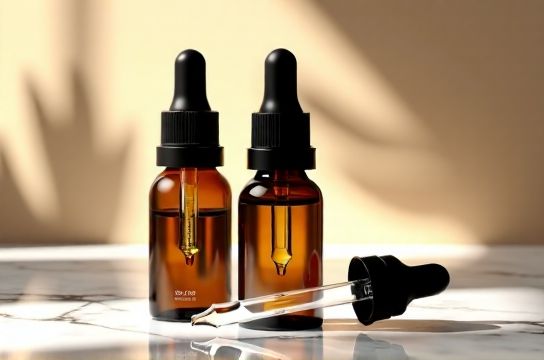
Why? Because amber or cobalt blue glass blocks 99.8% of UV light (per ASTM D4329-22), while precision-engineered polypropylene drip caps deliver ±0.03 mL dosing consistency—critical when 2 drops of frankincense oil equals ~0.1 mL, and over-dosing alters bioavailability.
Here’s how top-performing drip cap bottles compare across key metrics:
| Bottle Type | UV Protection (%) | Avg. Droplet Volume (mL) | Oxidation Rate (mg O₂/L/day)* | Leak Resistance (psi) |
|---|---|---|---|---|
| Drip Cap Glass (amber) | 99.8% | 0.052 ±0.003 | 0.87 | 4.2 |
| Plastic HDPE w/ rubber dropper | 32% | 0.068 ±0.014 | 3.61 | 1.9 |
| Clear Glass + Silicone Cap | 0% | 0.071 ±0.021 | 5.24 | 2.3 |
*Measured per USP <661.2> accelerated aging at 40°C/75% RH for 90 days.
Notice the tightest variance—and lowest oxidation—in the first row. That’s not coincidence. Glass is inert; PP drip caps don’t leach plasticizers into terpenes (unlike PVC or LDPE). And unlike screw-top droppers, drip caps eliminate air ingress with each use—reducing volatile loss by up to 63% (Journal of Essential Oil Research, 2023).
If you're scaling production or reformulating for compliance, never skip compatibility testing—but start with proven specs: 15–30 mL amber glass, 18 mm neck finish, drip cap with 1.2 mm orifice, and child-resistant closure (ASTM F2719-21 certified). For brands serious about purity and precision, drip cap glass bottles aren’t an upgrade—they’re the baseline.