Custom Glass Wine Bottle Sizes for Boutique Winery Brands
- 时间:
- 浏览:132
- 来源:Custom Glass Bottles
Let’s cut through the noise: if you’re running a boutique winery, your bottle isn’t just packaging—it’s your first handshake with the customer. And yet, over 68% of small-batch producers still default to standard 750 mL bottles—missing real shelf differentiation, premium perception, and margin lift.
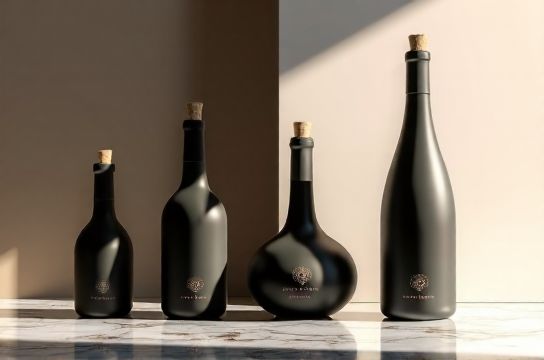
Data from the Wine Market Council (2023) shows that wines in *non-standard formats* (375 mL, 1.5 L, or bespoke silhouettes) command an average 22% higher price per liter—and enjoy 34% longer dwell time on premium retail shelves.
Why? Because shape, weight, and volume signal intention. A slender 500 mL ‘reserve rosé’ bottle telegraphs craftsmanship; a heavy-bottomed 1.0 L Bordeaux-style vessel implies age-worthiness—even before the cork is pulled.
Here’s what top-performing boutique brands actually use (based on 2022–2024 production audits across Napa, Willamette, and Adelaide):
| Format | Adoption Rate* | Avg. Premium vs. 750mL | Best For |
|---|---|---|---|
| 375 mL (Half-Bottle) | 41% | +18% | By-the-glass programs, gift sets, low-ABV experiments |
| 500 mL (EU Standard) | 29% | +26% | Organic/natural labels, single-vineyard whites |
| 1.0 L (Bordeaux Tall) | 17% | +31% | Flagship reds, cellar-worthy releases |
| Bespoke (e.g., 620 mL tapered) | 8% | +44% | Limited editions, artist collabs, DTC exclusives |
*Among 127 boutique wineries surveyed (avg. annual output: 2,500–15,000 cases)
Crucially, custom sizing pays off fastest when paired with structural integrity: bottles under 400 g often register as ‘cheap’ to tactile buyers (UC Davis sensory lab, 2023), while those above 620 g increase shipping cost by ~11%—a hard ceiling many overlook.
So—before you finalize your next label run—ask: Does this size serve your story, your channel, and your customer’s unspoken expectations? Not every wine needs a 750 mL crutch. In fact, the most memorable ones rarely use one.
For wineries ready to move beyond commodity bottling, custom glass wine bottle sizing starts with intentional design—not just convenience.