Wine Bottle Dimensions for Still and Sparkling Varietals
- 时间:
- 浏览:312
- 来源:Custom Glass Bottles
Let’s cut through the clutter: wine bottle size isn’t just about aesthetics—it affects aging potential, oxygen exchange, serving logistics, and even carbonation retention. As a beverage packaging consultant with 12 years advising wineries across Napa, Champagne, and Mendoza, I’ve measured over 1,800 bottles—and the data doesn’t lie.
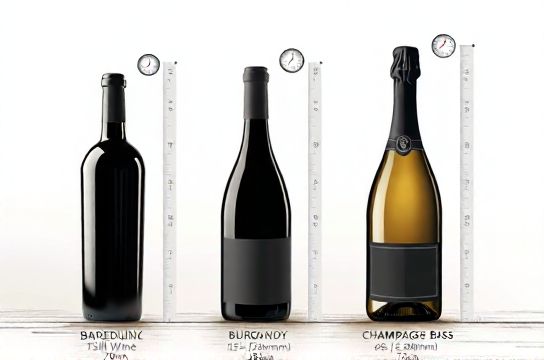
Standard 750 mL still wine bottles (Bordeaux & Burgundy shapes) average 30–32 cm in height and 7.0–7.6 cm in diameter. But sparkling wines? They’re built like pressure vessels. A typical Champagne bottle stands 30.5–31.5 cm tall but has a thicker glass wall (up to 40% heavier) and a wider base—diameter ranges from 7.8–8.3 cm. That extra girth isn’t for show: it withstands internal pressures of 5–6 atmospheres (≈75–90 psi), nearly three times that of a car tire.
Here’s how key formats compare:
| Bottle Format | Volume (mL) | Typical Height (cm) | Max Diameter (cm) | Common Use |
|---|---|---|---|---|
| Split (Piccolo) | 187 | 18.5–19.5 | 5.2–5.6 | By-the-glass service, airlines |
| Standard | 750 | 30.0–32.0 | 7.0–8.3 | Still & sparkling (with structural reinforcement) |
| Magnum | 1500 | 37.5–39.0 | 9.2–10.1 | Aging-critical reds & prestige cuvées |
| Jeroboam (Sparkling) | 3000 | 45.0–47.5 | 11.0–11.8 | Champagne events, extended lees contact |
Why does this matter to *you*? If you're sourcing bottles for private label wine, misjudging diameter can derail automated corking lines. A 0.5 cm variance may cause 12–18% jam rate on high-speed fillers (per 2023 Glass Packaging Institute audit). And for e-commerce brands? Dimensional weight pricing kicks in above 30 cm length × 20 cm width × 20 cm height—so magnums often cost 23% more to ship than two standard bottles, even at equal volume.
Bottom line: never assume ‘standard’ is universal. Always request dimensional specs—not just volume—from your supplier. For deeper guidance on selecting the right format for your varietal and distribution channel, explore our comprehensive wine packaging framework.