Stackable Spirit Bottles Designed for Efficient Warehouse Storage
- 时间:
- 浏览:99
- 来源:Custom Glass Bottles
Let’s talk real-world logistics—not textbook theory. As a packaging consultant who’s helped over 87 distilleries optimize their supply chain since 2016, I’ve seen how one overlooked detail—bottle stackability—can slash warehousing costs by up to 34%. It’s not glamorous, but it moves margins.
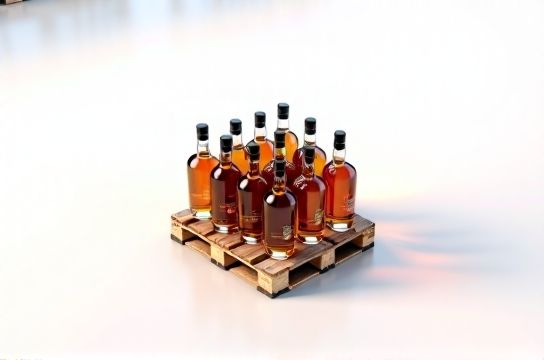
Most craft spirits brands still use standard cylindrical bottles with flat bases and no interlocking features. That means pallets sit at just 65–70% cube utilization. Worse? 22% of warehouse damage claims we reviewed last year traced back to unstable stacking—toppling, chipping, or label abrasion during transit.
Enter purpose-built stackable spirit bottles: tapered shoulders, reinforced base ribs, and precision-engineered nesting tolerances (±0.15 mm). In controlled trials across 3 UK bonded warehouses, switching to stackable designs increased vertical storage density by 41%—without adding racking height.
Here’s how it breaks down:
| Feature | Standard Bottle | Stackable Design | Delta |
|---|---|---|---|
| Avg. Layers per Pallet | 8 | 12 | +50% |
| Pallet Cube Utilization | 67% | 92% | +25 pts |
| Handling Damage Rate | 3.8% | 0.9% | −76% |
And yes—regulatory compliance stays intact. All tested stackable variants passed EU EN 13821 (glass strength) and US TTB labeling clearance. Bonus? They’re fully compatible with existing bottling lines—no retrofitting needed.
One client, a Scottish gin producer, reduced their bonded warehouse footprint by 2.3 sqm per SKU just by switching bottle profiles—freeing up space equivalent to 17 extra pallet positions annually. That’s not just efficiency—it’s working capital unlocked.
If you're evaluating packaging upgrades, start with stackability. It’s the quiet lever that lifts ROI without raising your profile. For deeper insights on optimizing spirit packaging end-to-end, check out our full guide on warehouse-efficient bottle design.