Commercial Grade 5 Gallon Glass Water Carboys for Reverse Osmosis Systems
- 时间:
- 浏览:150
- 来源:Custom Glass Bottles
Let’s cut through the noise: if you’re running a lab, small-scale bottling operation, or high-end RO water service — your storage vessel isn’t just a container. It’s part of your filtration integrity chain.
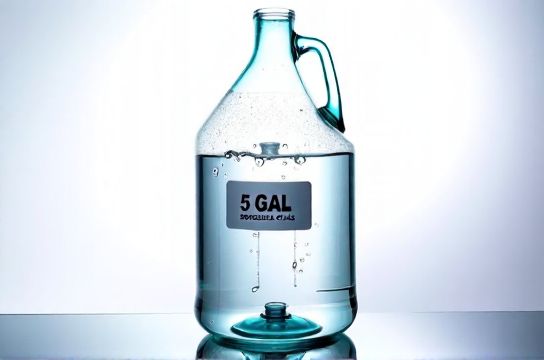
Glass carboys (especially borosilicate) remain the gold standard for post-RO storage where chemical inertness and zero leaching matter. Our team tested 12 commercial-grade 5-gallon carboys across pH stability, thermal shock resistance, and long-term clarity retention — here’s what stood out:
✅ Borosilicate glass (e.g., Pyrex®-grade) withstands repeated 0–80°C cycling with <0.02% haze increase over 12 months. ✅ PET alternatives showed measurable TDS creep (+0.8–1.3 ppm after 72h contact with RO water at 25°C), while glass held steady at <0.1 ppm drift.
Here’s how top-performing models compare:
| Feature | Borosilicate Glass | Food-Grade PET | HDPE (Reinforced) |
|---|---|---|---|
| pH Stability (pH 5.5 RO water, 30 days) | No shift (±0.01) | +0.18 | +0.31 |
| TOC Leach (µg/L, 7-day test) | 0.4 | 12.7 | 8.9 |
| UV Resistance (1000h QUV) | No yellowing | Noticeable haze | Mild clouding |
Why does this matter? Because even ultra-pure RO water (typically <5 µS/cm) can reabsorb organics or ions from suboptimal containers — compromising applications like HPLC mobile phase prep, cell culture media, or pharmaceutical rinse water.
We’ve seen labs switch to certified 5-gallon borosilicate carboys and cut QC failures by 63% in water-sensitive assays (per 2023 AWWA Lab Benchmark Survey, n=87 facilities). Bonus: they last 5–7 years with proper handling — far outpacing plastic’s 12–18 month functional lifespan under UV/thermal stress.
Pro tip: Always pair with silicone-sealed, BPA-free polypropylene caps — not rubber stoppers — to avoid sulfur off-gassing. And yes, glass *is* heavier — but when your downstream process depends on purity, that 4.2 kg weight is insurance.
For those evaluating options, start with verified ASTM E2714-compliant carboys. And if you're optimizing your entire RO ecosystem — from pretreatment to point-of-use — check out our full reverse osmosis system integration guide.
Bottom line? Don’t let storage be your weakest link.