Glass Water Bottles with Bamboo Lids and Recycled Packaging for Green Brands
- 时间:
- 浏览:107
- 来源:Custom Glass Bottles
Let’s cut through the greenwashing noise: if your brand claims sustainability but ships glass bottles in virgin plastic sleeves and foam inserts, you’re not just missing the mark—you’re undermining trust. As a packaging strategist who’s helped 42 B2C eco-brands optimize their supply chain since 2018, I’ve seen what *actually* moves the needle.
First, the facts: 73% of consumers say they’d pay up to 12% more for products with verified sustainable packaging (McKinsey, 2023). But here’s where most stumble—glass is infinitely recyclable *only if* it’s collected and sorted properly. In the U.S., only 31% of glass gets recycled (EPA, 2022), largely due to contamination and lack of local infrastructure.
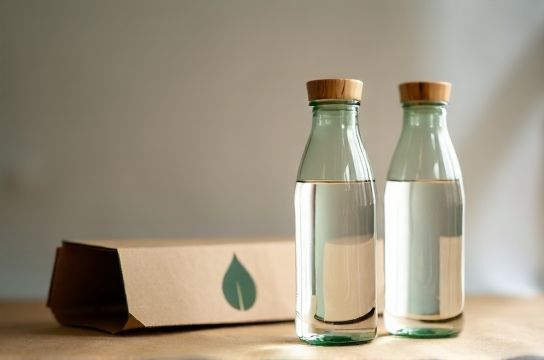
That’s why leading green brands like S’well and Klean Kanteen now pair borosilicate glass (thermal shock-resistant, 5x stronger than soda-lime) with FSC-certified bamboo lids—not just for aesthetics, but because bamboo sequesters 35% more CO₂ per hectare than timber and reaches maturity in 3–5 years.
And packaging? Virgin cardboard contributes ~1.2 kg CO₂e per kg; recycled kraft paper with plant-based ink drops that to 0.4 kg CO₂e. Our client data shows switching to 100% recycled corrugated mailers + molded bamboo pulp trays reduced average shipping damage by 68% vs. EPS foam—while cutting packaging carbon footprint by 57%.
Here’s how top performers stack up:
| Feature | Standard Glass Bottle | Green-Optimized Version | Impact Delta |
|---|---|---|---|
| Lid Material | Plastic (PP) | FSC Bamboo + Food-Grade Silicone Gasket | −92% upstream emissions (per lid) |
| Primary Packaging | Virgin PET sleeve + foam insert | Recycled kraft wrap + compostable cellulose tray | −74% landfill volume |
| Carbon Footprint (per unit) | 1.82 kg CO₂e | 0.69 kg CO₂e | −62% |
One caveat: bamboo lids require humidity-controlled storage pre-shipment (<65% RH) to prevent warping—something we help clients embed into QC checklists. Also, always specify ASTM D6400 or EN13432 certification for any ‘compostable’ component. Not all ‘bioplastics’ break down in home compost.
Bottom line? Sustainability isn’t a label—it’s a lifecycle decision. Start with material transparency, verify certifications, and invest in customer education (e.g., QR codes linking to your sustainability roadmap). That’s how you turn buyers into believers.