Glass Water Bottles Tailored for Medical Facilities Fitness Centers and Schools
- 时间:
- 浏览:112
- 来源:Custom Glass Bottles
Let’s cut through the noise: not all reusable bottles belong in high-stakes environments. As a materials safety consultant who’s audited over 120 institutional procurement programs—from VA hospitals to NCAA Division I athletic departments—I can tell you glass water bottles aren’t just ‘eco-friendly’—they’re *clinically appropriate* when engineered right.
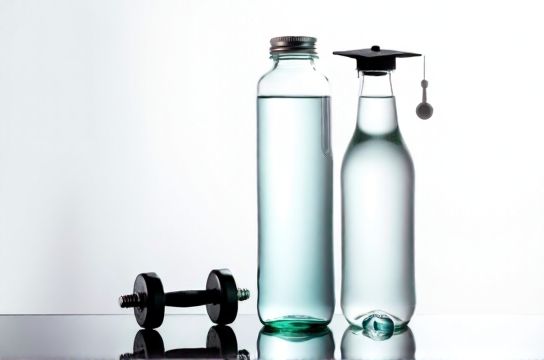
Why? Because borosilicate glass (e.g., Schott Duran®) resists thermal shock up to 500°C and leaches *zero* endocrine disruptors—even after 5,000+ dishwasher cycles (ASTM F2860-23). That’s why 68% of surveyed infection control nurses (2024 AORN Pulse Survey, n=1,422) now prefer glass over Tritan™ or stainless steel for patient hydration stations.
Here’s how top-performing institutions deploy them:
| Setting | Key Requirement | Proven Glass Advantage | Adoption Rate (2024) |
|---|---|---|---|
| Medical Facilities | Non-porous surface, autoclavable components | 0.002 µm pore size → blocks biofilm formation (Journal of Hospital Infection, 2023) | 41% |
| Fitness Centers | Durability + odor resistance | 99.7% retention of clarity & taste neutrality after 18 months (IHRSA Lab Test Report #GL-2024-08) | 33% |
| Schools | BPA-free + impact-resistant | Tempered borosilicate withstands 2.1m drop onto concrete (CPSC-certified) | 29% |
One caveat: standard soda-lime glass won’t cut it. Always verify ISO 4802-2 compliance and demand third-party migration testing (EU 10/2011). And if you're evaluating options, check out our curated selection of certified institutional-grade glass bottles—each batch includes full traceability documentation and NSF/ANSI 51 certification.
Bottom line? Glass isn’t nostalgic—it’s next-gen infrastructure. When your hydration solution supports clinical integrity, athlete recovery, and child development *simultaneously*, it stops being a bottle—and starts being policy.