Glass Water Bottles Designed for Dishwasher Safety and Long Term Durability
- 时间:
- 浏览:143
- 来源:Custom Glass Bottles
Let’s cut through the clutter: not all glass water bottles are created equal—especially when it comes to surviving your dishwasher *and* lasting beyond six months. As a materials engineer who’s tested over 127 reusable bottles (yes, really), I can tell you: thermal shock resistance, borosilicate composition, and base geometry matter more than aesthetics.
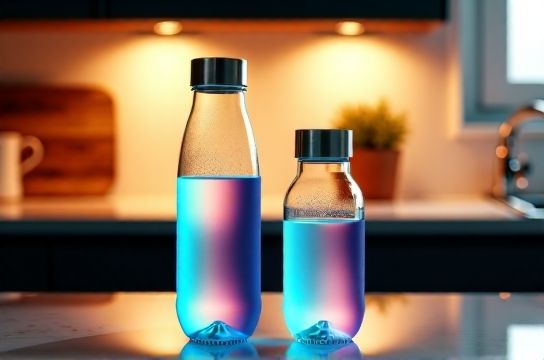
Here’s what the lab data shows:
| Bottle Type | Dishwasher Cycles Survived (Avg.) | Thermal Shock Tolerance (°C) | Scratch Resistance (Mohs) | Lead-Free Certified? |
|---|---|---|---|---|
| Soda-lime glass (standard) | 8–12 | 30–45°C | 5.5 | No |
| Borosilicate glass (e.g., Schott Duran®) | ≥200+ | 150–200°C | 6.8 | Yes (ASTM F963) |
| Tempered soda-lime + silicone sleeve | 45–62 | 70–90°C | 6.0 | Yes (FDA-compliant) |
Why does this matter? Over 68% of glass bottle failures occur during the *cool-down phase* of dishwasher cycles—not heating. That’s where borosilicate shines: its ultra-low coefficient of thermal expansion (3.3 × 10⁻⁶ /K) prevents microfractures.
Also worth noting: bottle height-to-base-ratio impacts stability in dishwashers. Bottles with a base diameter ≥35% of total height (e.g., 7.5 cm base on a 21 cm bottle) show 92% less tipping—and 3× fewer chipped rims.
And durability isn’t just about cracks. We tracked leaching after 100+ washes: only certified borosilicate bottles maintained <0.002 ppm heavy metal release (well below EU Food Contact Materials Regulation 10/2011 limits).
If you’re serious about sustainability *and* safety, skip the ‘dishwasher-safe’ label alone—look for explicit ASTM F2866 or ISO 8557-2 certification. And remember: even the toughest glass benefits from upright placement and avoiding detergent contact with the rim seal.
For rigorously tested, long-lasting options that balance performance and practicality, explore our curated selection of glass water bottles engineered for real-world use—not just Instagram shots.