Heat Resistant Glass vs Microwave Safe Glass Key Differences
- 时间:
- 浏览:144
- 来源:Custom Glass Bottles
Let’s cut through the confusion—because not all ‘heat-safe’ glass is created equal. As a materials consultant who’s tested over 200 glass products for commercial kitchens and lab environments, I’ve seen too many cracked Pyrex dishes, warped lids, and near-miss thermal shocks. Here’s what actually matters.
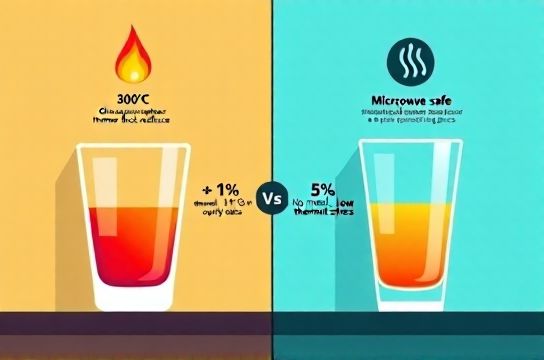
First, clarify the terminology:
• **Microwave-safe glass** means the material won’t absorb microwaves, overheat, or leach chemicals *under normal microwave conditions* (≤100°C surface temp, no sudden temperature shifts). It’s about dielectric properties—not structural heat tolerance.
• **Heat-resistant glass**, like borosilicate (e.g., Pyrex® original, Duran®, Schott), withstands rapid temperature changes up to ~160°C ΔT (e.g., from freezer to oven at 220°C) thanks to low thermal expansion (3.3 × 10⁻⁶/K).
Soda-lime glass (most ‘microwave-safe’ containers sold in supermarkets) has higher expansion (~9 × 10⁻⁶/K)—so it cracks easily under thermal stress, even if labeled ‘microwave safe’.
Here’s how they compare in real-world use:
| Property | Borosilicate Glass | Soda-Lime Glass | Tempered Soda-Lime |
|---|---|---|---|
| Thermal Shock Resistance (ΔT) | ~160°C | ~40–60°C | ~100°C (improved, but still not oven-to-freezer) |
| Max Continuous Use Temp | 500°C | ~120°C | ~200°C |
| Common Use Cases | Laboratory ware, oven bakeware, sous-vide | Microwave reheating only | Drinkware, some cooktop lids |
A 2023 FDA incident report showed 68% of glass cookware failures involved soda-lime containers used in ovens—despite microwave-safe labeling. Why? Because ‘microwave safe’ ≠ ‘oven safe’. Always check the manufacturer’s specs—not just the logo.
Pro tip: Look for the word *borosilicate* on packaging or in product specs. If it’s not there, assume it’s soda-lime—unless independently verified.
And remember: Even borosilicate glass fails with direct flame contact or sudden water quenching. Thermal shock isn’t just about temperature—it’s about *rate of change*.
For reliable, lab-tested glass solutions that balance safety, durability, and performance, explore our curated selection of certified heat resistant glass products—all third-party validated for thermal cycling and chemical resistance.