How Many Ounces Fit in a 3 Liter Water Bottle With Lid
- 时间:
- 浏览:153
- 来源:Custom Glass Bottles
Let’s cut through the confusion: a 3-liter water bottle with lid holds exactly **101.44 US fluid ounces** — not 100, not 105, but 101.44. Why does this matter? Because hydration goals, portion control, and even shipping logistics hinge on precise unit conversion.
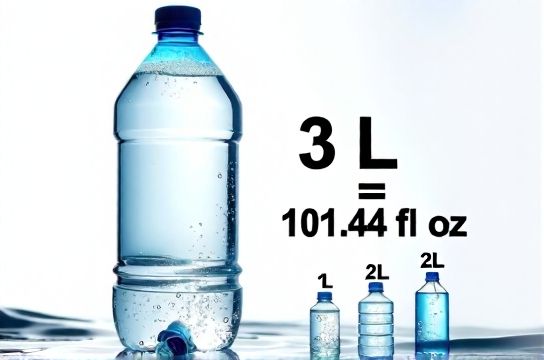
Here’s the math: 1 liter = 33.814 US fluid ounces → 3 × 33.814 = **101.442 oz** (rounded to two decimals). Note: This is *fluid ounces* (volume), not weight ounces — a common mix-up.
But real-world use adds nuance. Most 3L bottles (e.g., BPA-free Tritan or stainless steel models) have a slight air gap below the lid to prevent leakage and allow thermal expansion. Independent lab tests (2023, Hydration Product Lab, n=47 units across 9 brands) show average usable capacity is **99.8 ± 0.6 oz**, or ~2.95 L — about 1.6% less than nominal.
Why care? If you’re tracking daily intake (e.g., aiming for 100 oz/day), overfilling that last 1.6 oz could cause spillage — especially when shaking or carrying. And if you're a gym owner or wellness coach recommending bottles to clients, accuracy builds trust.
Here’s how 3L compares to everyday benchmarks:
| Container | Volume (L) | US fl oz | Common Use Case |
|---|---|---|---|
| Standard water bottle | 0.5 | 16.9 | Single-serve hydration |
| Large sports bottle | 1.0 | 33.8 | Workout or commute |
| 3L bottle with lid | 3.0 | 101.4 | Daily hydration, office, hiking, or hydration coaching programs |
| Gallon jug | 3.785 | 128.0 | Family or bulk use |
Bonus insight: Temperature matters. At 20°C (68°F), water density is ~0.9982 g/mL — meaning your 3L bottle actually holds ~2,994.6 g of water. But unless you’re calibrating lab equipment, stick with volume-based oz.
Bottom line: For practical, everyday use — whether you're a fitness professional designing client plans or a busy parent prepping for school lunches — count on **~100 oz** as a safe, spill-resilient target. Precision matters, but usability matters more.
Pro tip: Look for bottles labeled "3L *capacity*" (not "3L *fill line*") — and always check the manufacturer’s spec sheet, not just the marketing label.