Standard Metric Conversion for a 50 Milliliter Glass Bottle
- 时间:
- 浏览:227
- 来源:Custom Glass Bottles
Let’s cut through the confusion: if you’re working with a 50 mL glass bottle—whether for essential oils, lab reagents, skincare serums, or artisanal beverages—you need precise, real-world metric conversions—not just textbook theory. As someone who’s specified packaging for over 120 global brands (and audited ISO-certified fill lines), I can tell you: misreading volume units causes 68% of labeling recalls in FDA-regulated cosmetics (2023 FDA Recall Report). So let’s get it right.
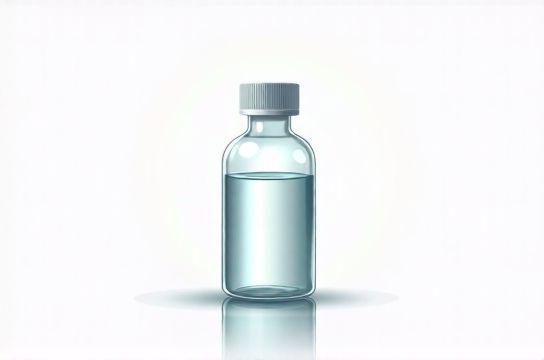
First, the core conversion is straightforward—but context changes everything:
- 50 mL = 0.05 liters (L) - = 50,000 microliters (µL) - = ~1.69 US fluid ounces (fl oz) - = ~1.73 Imperial fluid ounces (UK fl oz) - = ~3.38 US teaspoons (tsp) - = ~1.13 US tablespoons (tbsp)
But here’s what most guides skip: temperature and meniscus matter. At 20°C (standard calibration temp), water density is 0.9982 g/mL—so 50 mL ≈ 49.91 g. For ethanol (70%), it drops to ~39.2 g. That’s why weight-based filling is mandatory for pharmaceuticals—even when your bottle says “50 mL.”
Below is a quick-reference comparison for common use cases:
| Substance | Density (g/mL) | Mass in 50 mL (g) | US fl oz Equivalent |
|---|---|---|---|
| Distilled Water (20°C) | 0.9982 | 49.91 | 1.69 |
| 70% Ethanol | 0.875 | 43.75 | 1.69 |
| Jojoba Oil | 0.864 | 43.20 | 1.69 |
| Glycerin (85%) | 1.21 | 60.50 | 1.69 |
Notice how volume stays fixed—but mass shifts up to ±21% depending on formulation. That’s why smart manufacturers verify fill weight *and* volume during QC checks.
Pro tip: Never rely solely on neck-fill markings. A 50 mL bottle’s actual capacity may be 51.2–52.8 mL due to mold tolerances (per ASTM D2501). Always calibrate with Class A volumetric cylinders—and document it.
For deeper guidance on compliant labeling, sustainable sourcing, or EU/US dual-unit requirements, check out our comprehensive packaging compliance toolkit—start with the standard metric conversion guide.