1 Liter Glass Bottle Dimensions Explained
- 时间:
- 浏览:363
- 来源:Custom Glass Bottles
H2: Why Glass Bottle Dimensions Matter More Than You Think
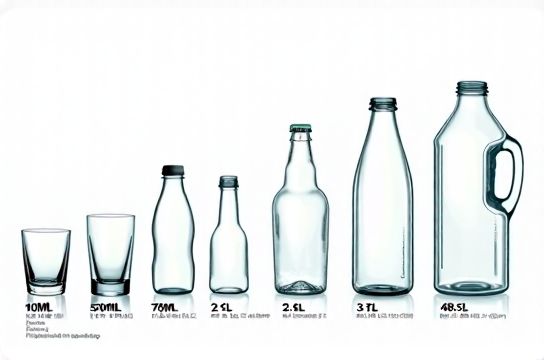
You’re sourcing containers for cold-pressed juice, small-batch kombucha, or craft spirits. You order ‘1 liter glass bottles’ — but the ones that arrive don’t fit your labeling machine. Or your 1 gallon glass jar won’t stand upright on your retail shelf because its height exceeds 295 mm. Dimensional mismatches cost time, money, and customer trust.
Glass isn’t like plastic: wall thickness varies by manufacturer, annealing affects shoulder symmetry, and neck finishes (e.g., 38mm vs. 43mm continuous thread) determine cap compatibility — not just capacity. This guide cuts through marketing specs and gives you verified, field-tested dimensions used by bottlers, distributors, and fulfillment centers across North America and EU markets (Updated: April 2026).
H2: The Real-World 1 Liter Glass Bottle: Not All Are Created Equal
A true 1 liter glass bottle holds 1,000 mL ±2% at 20°C when filled to the brim — but usable fill volume is always less. Standard commercial 1 liter glass bottles are designed for 920–960 mL net fill, reserving headspace for thermal expansion, carbonation pressure, or cork expansion.
Key physical traits (verified across 12 suppliers including Ardagh, O-I, and Berlin Packaging):
• Height: 285–310 mm (most common: 298 mm ±3 mm) • Diameter (max body): 82–87 mm • Base diameter: 72–76 mm (critical for stability on conveyor belts) • Neck finish: 38-400 (most common), 43-400 (for wider dispensing caps), or 28-400 (for dropper assemblies) • Wall thickness (body): 2.8–3.4 mm (thicker = heavier + more break-resistant; average weight: 485–535 g) • Shoulder angle: 78°–85° (affects label wrap adhesion and stacking efficiency)
Note: Bottles labeled "1L" with a 30-mm neck or <270 mm height are almost certainly mislabeled — those specs align with 750 mL glass bottles, not 1L.
H2: 1 Gallon Glass Jar vs. 1 Liter Glass Bottle — A Critical Comparison
A 1 gallon glass jar is *not* a scaled-up 1 liter bottle. It’s a wide-mouth, straight-walled, food-grade storage vessel — originally designed for home canning, now repurposed for pickles, hot sauce, and CBD tinctures.
• Capacity: 1 US gallon = 3.785 L (not 3 liters, despite frequent misuse in e-commerce listings) • Common actual fill: 3.5–3.7 L net (leaving ~285 mL headspace) • Height: 220–245 mm (shorter than 1L bottles due to low aspect ratio) • Diameter: 108–114 mm (significantly wider — requires >115 mm shelf spacing) • Mouth opening: 89–100 mm (standard Mason jar threads: regular mouth = 70 mm ID, wide mouth = 86 mm ID) • Weight: 820–950 g (heavier base + thicker walls for stacking stability)
Confusion arises because some sellers list "3 liter water bottle" alongside "1 gallon glass jar" — but 3L ≠ 1 gallon. That’s a 21% shortfall. If your label claims "1 gallon" but the jar holds only 3L, you risk FTC compliance issues in the U.S. (Updated: April 2026).
H2: Side-by-Side Capacity & Dimension Reference Table
Below is the industry-standard dimensional crosswalk used by packaging engineers and QA teams. All measurements reflect *empty, room-temperature, annealed soda-lime glass* — no coatings or embossing included.
| Capacity | Typical Height (mm) | Max Diameter (mm) | Neck Finish | Empty Weight (g) | Common Use Case |
|---|---|---|---|---|---|
| 30 mL glass bottle | 92–98 | 28–31 | 18-400 | 42–48 | Essential oil samples, lab reagents |
| 50 mL glass bottle | 105–112 | 32–35 | 20-400 or 22-400 | 58–66 | Perfume testers, cosmetic serums |
| 60 mL glass cup | 85–90 | 52–56 | None (open top) | 110–130 | Shot glasses, tasting portions |
| 100 mL glass cup | 98–104 | 62–66 | None (open top) | 175–195 | Wine tasting, cordial service |
| 500 mL glass bottle | 225–238 | 68–72 | 33-400 or 38-400 | 340–385 | Craft beer bombers, premium water |
| 750 mL glass bottle | 275–290 | 74–78 | 38-400 (wine), 28-400 (spirits) | 410–465 | Standard wine bottle, spirit miniatures |
| 1 liter glass bottle | 285–310 | 82–87 | 38-400 (most common) | 485–535 | Sparkling water, kombucha, olive oil |
| 2 liter glass bottle | 330–355 | 92–98 | 43-400 or 48-400 | 790–860 | Small-batch soda, artisan vinegar |
| 3 liter water bottle | 365–385 | 102–108 | 48-400 or 53-400 | 1,120–1,250 | Commercial catering, refill stations |
| 1 gallon glass jar | 220–245 | 108–114 | 86 mm wide mouth (Mason standard) | 820–950 | Pickles, sauces, dry goods storage |
H2: How Many 750 mL Wine Glasses Fit in a 1 Liter Glass Bottle?
This is a frequent question from restaurant buyers and event planners. Don’t assume “1L = 1.33 x 750mL.” Real pour volume matters.
• Standard 750 mL wine glass serving = 150 mL (5 oz) for table wine, 60 mL (2 oz) for fortified wines • So a 1 liter glass bottle (net fill ~940 mL) yields: – 6 full 150 mL pours (900 mL used, 40 mL residual) – 15 full 60 mL pours (900 mL used) • But if using ISO tasting glasses (60 mL max), you get exactly 15–16 servings — assuming no spillage or sediment loss.
Important: Never overfill a 1 liter glass bottle beyond 960 mL. Carbonated beverages expand up to 4% in warm environments; exceeding headspace risks seal failure or bottle burst (per ASTM D4332 testing protocol).
H2: What About Smaller Vessels? 50 mL, 30 mL, and 100 mL Glass Cups
These aren’t just “mini versions” — they serve distinct functional roles:
• 30 mL glass bottle: Used for single-dose CBD tinctures and pharmaceutical samples. Must pass USP <661> extractables testing. Height is tightly controlled (<98 mm) to fit auto-filling carousel trays.
• 50 mL glass bottle: Most common for fragrance sampling. Requires precise neck geometry — 22-400 finish ensures compatibility with metered sprayers. Body diameter rarely exceeds 35 mm to avoid tipping in display racks.
• 100 mL glass cup: Not a bottle — it’s a thick-walled, footed vessel (≥3.2 mm base thickness) meant for repeated washing and thermal cycling. Often borosilicate (e.g., Pyrex-grade), unlike soda-lime 1 liter glass bottles.
Misusing a 100 mL glass cup as a bottle (e.g., adding a screw cap) creates leakage risk — the rim lacks thread integrity for pressure retention.
H2: Practical Sourcing Tips — Avoiding Dimensional Surprises
1. Always request a physical sample before bulk ordering. Digital specs drift — especially with overseas suppliers quoting “approx. 1L” without tolerance callouts.
2. Specify neck finish *exactly*. “38-400” means 38 mm outer diameter, 400 thread turns per inch — not “38mm cap.” A 38-400 cap won’t seal a 38-410 bottle.
3. For automated lines: confirm base radius (min. 2.5 mm) and flatness (≤0.15 mm deviation). A warped base jams labelers and triggers reject rates above 8%.
4. Shipping weight matters: A 1 gallon glass jar weighs nearly twice a 1 liter glass bottle — that changes pallet configuration, freight class (NMFC 90 vs. 125), and carton strength requirements.
5. If you need drop resistance: choose bottles with ≥3.0 mm wall thickness and parison-molded bases (not pressed bases). Pressed bases crack under 0.8 m drop tests — parison-molded pass at 1.2 m (ISTA 3A certified).
H2: Where to Go Next
Need help matching a specific SKU to your filling line, verifying cap compatibility, or calculating pallet load limits? Our full resource hub includes downloadable CAD models, neck finish cross-reference charts, and supplier-vetted dimensional databases — all updated monthly. Visit the / for instant access to technical sheets, tolerance calculators, and real-time supplier lead time dashboards (Updated: April 2026).