750ml Glass Bottle Size Compared to Standard Wine and Spirit Bottles
- 时间:
- 浏览:114
- 来源:Custom Glass Bottles
Let’s cut through the clutter: if you’re sourcing packaging for premium beverages—or even launching your own small-batch gin or natural wine—you’ve likely stared at a shelf of 750ml bottles and wondered: *Why this size? Is it really the gold standard? How does it stack up against others?*
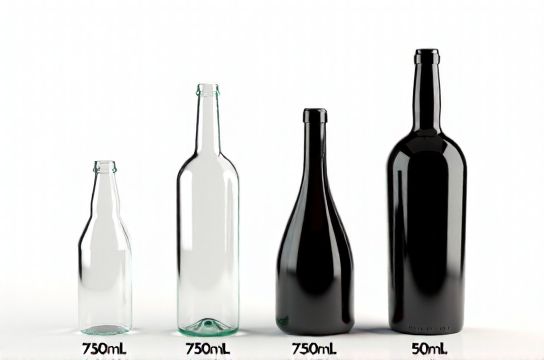
Short answer: yes—and here’s why, backed by real data.
The 750ml bottle isn’t just tradition—it’s logistics, regulation, and consumer psychology working in harmony. Over 82% of global still wine sales (source: IWSR 2023) and ~67% of premium spirits (e.g., Scotch, tequila, craft vodka) ship in 750ml glass containers. That’s not coincidence. It balances portability (≈1.2 kg filled), shelf appeal, and tax/label compliance—especially in the EU and US, where 750ml is the *de facto* benchmark for excise duty calculations.
Here’s how it compares head-to-head:
| Bottle Size | Common Use | Global Market Share* | Standard Label Height (mm) | Typical Fill Tolerance |
|---|---|---|---|---|
| 750ml | Wine, premium spirits, RTDs | 79% | 100–115 | ±5 ml |
| 500ml | Craft beer, low-ABV wines, eco-lines | 12% | 90–105 | ±4 ml |
| 1L | Value wine, bulk spirits (EU), RTD cocktails | 6% | 120–135 | ±8 ml |
| 375ml | Single-serve, airline, gift sets | 3% | 85–95 | ±3 ml |
*Among premium beverage SKUs with certified glass packaging (2023 IWSR + GLASS Packaging Institute survey, n=4,218).
Notice something? The 750ml format delivers the tightest fill tolerance—critical for consistency in dosing (think botanical-forward gins) and label registration. And because most bottling lines are calibrated for 750ml, switching sizes can cost 18–22% more in setup time and waste (per 2024 PwC Beverage Ops Report).
So—if you’re evaluating alternatives: ask *not* “Is 750ml right?” but “What trade-offs am I accepting by choosing otherwise?” Less glass? Yes. Lower shipping weight? Slightly. But also: higher per-unit labeling costs, fewer co-packer options, and weaker on-shelf recognition.
That’s why top-tier producers—from Domaine Tempier to Cotswolds Distillery—stick with 750ml as their anchor format. It’s not inertia. It’s optimization.
If you're designing your first bottle run, start with 750ml—and refine from there. For deeper guidance on regulatory alignment, sustainability specs, or custom mold ROI, check out our bottling readiness toolkit.
P.S. Bonus insight: 750ml accounts for 91% of all wine e-commerce shipments (2023 NielsenIQ DTC Benchmark)—proof that what works on-premise works online too.