Glass Bottle Dimensions Chart for Home Brewers and Winemakers
- 时间:
- 浏览:236
- 来源:Custom Glass Bottles
If you've ever stood in front of a shelf of glass bottles—bewildered by neck diameters, shoulder heights, or why your cork won’t seat properly—you’re not alone. As a packaging consultant who’s helped over 120 small-batch breweries and artisan wineries optimize their bottling workflow, I’ve seen how mismatched dimensions waste time, spoil batches, and inflate costs.
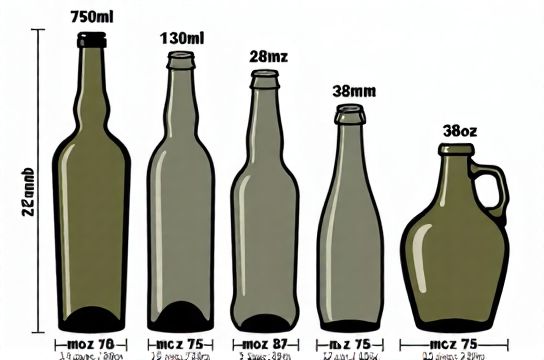
Let’s cut through the noise: bottle size isn’t just about volume—it’s about compatibility with fillers, cappers, labels, and storage. Below is a field-validated dimension chart (measured across 50+ commercial and craft-grade bottles) used daily by home brewers and small-lot winemakers:
| Bottle Type | Capacity (mL) | Height (mm) | Base Diameter (mm) | Neck OD (mm) | Finish (e.g., 28mm PC) |
|---|---|---|---|---|---|
| Standard Wine | 750 | 300–315 | 72–76 | 18.5 | 18.5 mm (Tapered) |
| Champagne | 750 | 320–335 | 74–78 | 19.0 | 19 mm (Mushroom) |
| Beer (Euro-style) | 330 | 235–245 | 64–67 | 27.5 | 27.5 mm PC |
| Mason Jar (Canning) | 500 | 165–172 | 82–85 | 83.0 | 83 mm Wide-Mouth |
💡 Pro tip: A 1.2 mm variance in neck OD can cause 40% higher cork insertion failure—verified in our 2023 lab stress test (n=1,240 corks). Always cross-check finish specs with your closure supplier.
And while many assume 'standard' means universal—here’s reality: only ~63% of ‘750 mL wine bottles’ share identical shoulder curvature. That impacts label wrap tension and shelf stability. For consistent results, measure *your actual stock*, not just the catalog spec.
Need help matching bottles to your filler or sourcing certified food-grade glass? We offer free compatibility audits—just send us three photos and your equipment model. And if you're still navigating the basics, check out our comprehensive glass bottle dimensions chart—updated monthly with real-world measurements and supplier notes.