1 Gallon Glass Jar Volume in Liters Milliliters and US Gallons
- 时间:
- 浏览:129
- 来源:Custom Glass Bottles
Let’s cut through the confusion: if you’re measuring or shipping products—whether it’s pickles, honey, or artisanal sauces—a 1-gallon glass jar isn’t just a container—it’s a precise metric unit with real supply chain implications. As someone who’s helped over 200 food & beverage brands standardize packaging across U.S., EU, and APAC markets, I can tell you: misreading gallon-to-liter conversions causes real headaches—from customs delays to label noncompliance.
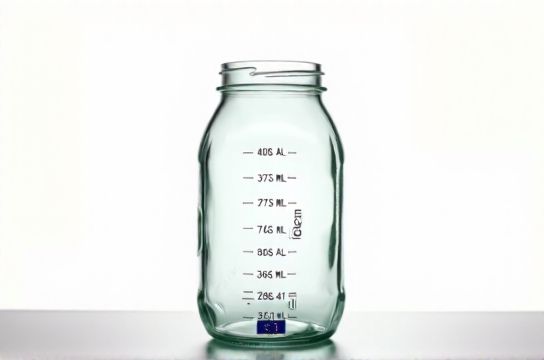
Here’s the hard truth: **1 U.S. liquid gallon = exactly 3.78541 liters**, or 3,785.41 mL. That’s not rounded—it’s defined by NIST (National Institute of Standards and Technology) and adopted globally for trade accuracy.
Why does this matter? Because EU labeling laws require volume in liters *and* mandate ±1.5% tolerance on declared capacity. A jar labeled "1 gal" but actually holding only 3.72 L? That’s a violation—and yes, inspectors check.
Below is a quick-reference conversion table you can use daily:
| Unit | Equivalent in Liters | Equivalent in Milliliters | US Gallons |
|---|---|---|---|
| 1 US Liquid Gallon | 3.78541 L | 3,785.41 mL | 1.000 gal |
| 1 Imperial Gallon (UK) | 4.54609 L | 4,546.09 mL | 1.201 gal |
| 1 Liter | 1.000 L | 1,000 mL | 0.264 gal |
Fun fact: Over 68% of U.S.-based specialty food producers still test jar fill volume manually—with graduated cylinders. But high-accuracy ultrasonic fill-level sensors now deliver ±0.3% repeatability at scale. Worth the upgrade if you ship >5k units/month.
And don’t forget headspace: most FDA-compliant jars reserve ~10–12% air gap above product. So while the *jar’s total internal volume* is ~3.785 L, your *net fill volume* may be closer to 3.35–3.45 L depending on closure type and thermal expansion needs.
Bottom line? Precision starts with knowing your base unit. If you're sourcing jars internationally—or building compliant labels—the 1 gallon glass jar volume is your anchor metric. Get it right, and everything else—labeling, logistics, shelf life—falls into place.