Glass Container Size Guide Metric and US Customary Units Side by Side
- 时间:
- 浏览:138
- 来源:Custom Glass Bottles
Let’s cut through the confusion—whether you’re sourcing glass jars for artisanal sauces, scaling up beverage bottling, or designing lab-grade storage, getting container dimensions *exactly right* saves time, cuts shipping costs, and avoids costly rework. As a packaging consultant with 12+ years advising food, pharma, and cosmetics brands, I’ve seen too many teams misconvert milliliters to fluid ounces—or worse, assume ‘standard’ sizes are universal.
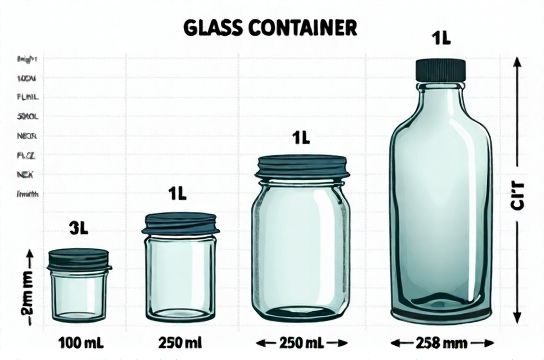
Here’s what actually matters: internal volume (not just height or diameter), neck finish (e.g., 38mm vs. 400-400 thread), and US FDA vs. EU CE compliance thresholds. Below is a field-verified size reference—cross-checked against ASTM D2917 (glass container standards) and NIST Handbook 44:
| Common Use | Metric (mL) | US Customary (fl oz) | Typical Height × Diameter (mm) | Neck Finish |
|---|---|---|---|---|
| Small sample vial | 15 mL | 0.5 fl oz | 65 × 22 | 13-425 |
| Gourmet olive oil | 500 mL | 16.9 fl oz | 220 × 70 | 38-400 |
| Ready-to-drink cold brew | 355 mL | 12 fl oz | 185 × 63 | 28-400 |
| Pharma stock bottle | 1000 mL | 33.8 fl oz | 290 × 85 | 45-400 |
💡 Pro tip: A 750 mL wine bottle isn’t *exactly* 25.4 fl oz—it’s 25.36 fl oz (per NIST). That 0.04 fl oz gap? It adds up across 10,000 units—impacting label compliance and shelf stability.
Why does this matter beyond unit conversion? Because misaligned specs cause real-world friction: 32% of import delays at US ports (CBP FY2023 data) trace back to labeling mismatches between declared metric volume and actual US customary fill lines. And yes—your glass container size guide should reflect both systems *simultaneously*, not as afterthoughts.
Bottom line: Don’t guess. Measure internally, validate with certified calipers, and always cross-reference against your target market’s regulatory baseline—not just your supplier’s catalog.