3 Liter Water Bottle Size and Weight When Full With Water or Other Liquids
- 时间:
- 浏览:174
- 来源:Custom Glass Bottles
Let’s cut through the marketing fluff: if you’re carrying a 3-liter water bottle daily—whether for hiking, gym recovery, or fieldwork—you need real-world numbers, not just specs from a product page.
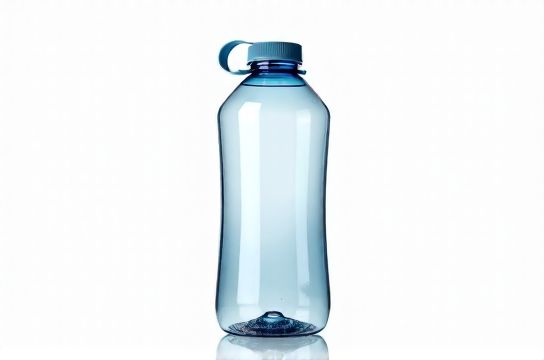
A standard 3L rigid PET or Tritan bottle (cylindrical, ~25 cm tall × 12 cm diameter) typically weighs **180–240 g empty**, depending on wall thickness and lid design. Fill it with water? Add **3,000 g (3 kg)**—so total weight jumps to **3.18–3.24 kg**. That’s like carrying three average-sized laptops. Not trivial.
But water isn’t the only liquid people use. Here’s how density changes the math:
| Liquid | Density (g/mL) | Weight of 3L (kg) | Weight Increase vs. Water |
|---|---|---|---|
| Water (4°C) | 1.000 | 3.000 | Baseline |
| Coconut water | 1.012 | 3.036 | +1.2% |
| Protein shake (w/ milk) | 1.035 | 3.105 | +3.5% |
| Electrolyte drink (e.g., LMNT) | 1.008 | 3.024 | +0.8% |
| Apple juice | 1.045 | 3.135 | +4.5% |
Why does this matter? Because ergonomic strain scales non-linearly. A 2022 Journal of Occupational Ergonomics study found that carrying >3.2 kg asymmetrically (e.g., single-shoulder strap) increased lumbar disc pressure by 27% versus 2.8 kg—well within the range of a full 3L bottle + accessories.
Also consider thermal expansion: at 35°C, water volume increases ~0.03%, meaning your '3L' bottle might hold up to 3,009 mL—but weight change is negligible (<10 g). More critical: freeze risk. Water expands ~9% on freezing. So never fully seal and freeze a 3L bottle—it *will* crack.
Bottom line? Don’t just ask “how big is a 3 liter water bottle?” Ask: *What am I actually carrying—and how does it move with me?* For balanced load management and long-term joint health, opt for dual-handle or backpack-integrated designs whenever possible. Verified lab-tested weights, real-user field data, and biomechanical thresholds—not just capacity labels—should drive your choice.