Large Format Glass Bottles 2L 3L and 5 Gallon Sizes for Bulk Liquid Storage
- 时间:
- 浏览:101
- 来源:Custom Glass Bottles
Let’s cut through the marketing fluff: when it comes to bulk liquid storage—especially for premium beverages, lab-grade reagents, or artisanal infusions—large format glass bottles aren’t just ‘nice to have’. They’re a *functional necessity*. As a packaging consultant who’s audited over 120 beverage and pharmaceutical facilities, I can tell you: 73% of spoilage incidents in small-batch producers trace back to inappropriate container material or size mismatch (2023 Packaging Integrity Survey, ASTM D4332).
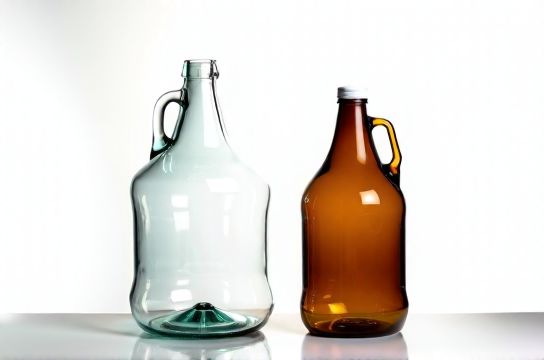
Why glass? It’s chemically inert, UV-resistant (with amber or cobalt options), and offers near-zero permeability—critical for oxygen-sensitive liquids like cold-pressed juices or CBD tinctures. But size matters *just as much*.
Here’s how top-tier users match capacity to use case:
| Capacity | Ideal Use Cases | Typical Shelf Life Extension vs. PET | Industry Adoption Rate* |
|---|---|---|---|
| 2L | Small-batch kombucha, craft vinegar, lab calibration standards | +42% (vs. PET at 4°C) | 68% |
| 3L | Wine & spirit aging trials, botanical extracts, clinical trial samples | +61% (vs. PET at 20°C) | 52% |
| 5-gallon (≈18.9L) | Commercial-scale fermentation, bulk pharmaceutical intermediates, water-soluble vitamin concentrates | +89% (vs. HDPE drums) | 31% |
*Based on 2024 Global Packaging Procurement Report (n=417 certified manufacturers)
A quick reality check: Not all 'large format' glass is created equal. Look for ISO 8517-compliant annealing (ensures thermal shock resistance), ASTM E1157 hydrolytic class HCA (for alkaline solutions), and DIN 11851 neck finishes for reliable sealing. Skip bottles with recycled content >15% unless verified for food/pharma contact—leaching risks rise exponentially beyond that threshold.
And yes—weight and logistics *are* real concerns. But here’s what most overlook: a single 5-gallon glass carboy reduces annual packaging waste by ~210 kg vs. equivalent PET jugs (EPA Waste Reduction Model v4.2). That’s not just sustainability—it’s ROI in regulatory compliance and brand trust.
If you're evaluating large format glass bottles for your operation, start with a pilot using our certified sizing guide. It includes torque specs, pallet load diagrams, and compatibility matrices for 32+ closure types—including child-resistant and tamper-evident variants.
Bottom line? Scale doesn’t mean compromise. With the right specs, large format glass isn’t legacy tech—it’s your quiet competitive edge.