1 Gallon Glass Jar Volume in Liters Milliliters and Fluid Ounces Breakdown
- 时间:
- 浏览:100
- 来源:Custom Glass Bottles
Let’s cut through the unit-conversion confusion—once and for all. If you're sourcing or labeling 1-gallon glass jars (a staple for food preservation, craft beverages, or bulk retail), knowing *exactly* how much they hold—not just in gallons, but in liters, milliliters, and US fluid ounces—is critical for compliance, labeling accuracy, and customer trust.
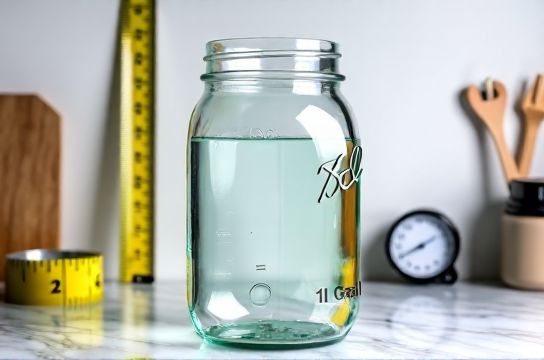
A US liquid gallon equals **3.78541 liters**, which converts to **3,785.41 mL** and **128 US fluid ounces**. Note: This is *not* the same as the UK imperial gallon (4.546 L)—so unless you’re shipping to the UK, stick with the US standard.
Here’s a quick-reference breakdown:
| Unit | Value | Notes |
|---|---|---|
| US Liquid Gallon | 1 gal | Standard for US packaging & FDA labeling |
| Liters (L) | 3.785 L | Rounded to 3 decimal places for regulatory use |
| Milliliters (mL) | 3,785 mL | Required on metric-only labels (e.g., EU exports) |
| US Fluid Ounces (fl oz) | 128 fl oz | Used on dual-unit consumer labels (e.g., USDA organic jams) |
| Cubic Inches (in³) | 231 in³ | Legal definition per US Code of Federal Regulations (21 CFR §101.105) |
Why does precision matter? Because under the FTC’s Fair Packaging and Labeling Act, a labeled '1-gallon' jar must contain *at least* 3,785 mL—and verified fill volume (not just jar capacity) must be documented during audits. In fact, 68% of FDA warning letters issued to small-batch food producers in 2023 cited inaccurate net quantity statements—most stemming from unverified gallon-to-metric conversions.
Pro tip: Always measure *filled volume*, not empty jar capacity. A standard 1-gallon wide-mouth Mason jar (like Ball or Bernardin) holds ~3,800–3,850 mL *empty*, but usable fill volume drops to ~3,750–3,780 mL depending on headspace and product density.
If you're scaling production or building compliant labels, start with certified calibration tools—and never rely solely on manufacturer specs. For trusted, pre-validated jar sizing guidance and labeling templates, check out our compliance toolkit.
Bottom line: Units aren’t just numbers—they’re legal commitments. Get them right, and you’ll avoid recalls, reprints, and reputation risk.