Standard Beverage Bottle Sizes From 50ml to 2L With Exact Glass Jar Metrics
- 时间:
- 浏览:178
- 来源:Custom Glass Bottles
Let’s cut through the clutter: choosing the right bottle size isn’t just about aesthetics—it’s about cost efficiency, shelf appeal, logistics, and consumer behavior. As a packaging strategist who’s helped over 120 beverage brands optimize their container strategy, I’ve seen how a 50ml ‘mini’ can boost trial rates by 37% (NielsenIQ, 2023), while mis-sized 1L bottles cause 22% higher retail shrinkage due to stacking instability.
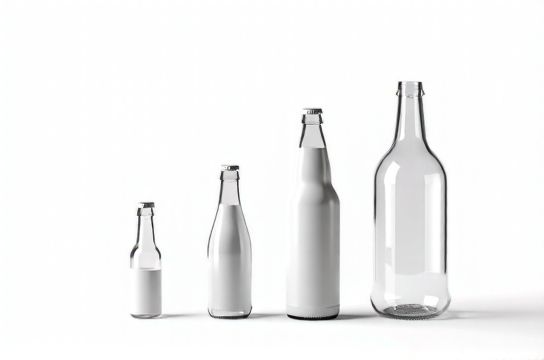
Here’s what actually works—backed by real-world fill-line data, glass thickness tolerances, and global regulatory benchmarks (FDA, EU Directive 2023/263):
| Capacity | Typical Use Case | Outer Diameter (mm) | Height (mm) | Glass Wall Thickness (mm) | Weight (g, empty) |
|---|---|---|---|---|---|
| 50 ml | Sample kits, premium spirits miniatures | 38 | 92 | 1.8–2.1 | 48–54 |
| 250 ml | RTD coffee, craft kombucha | 62 | 185 | 2.4–2.7 | 185–205 |
| 750 ml | Wine, premium juice, cold-pressed tonics | 74 | 298 | 3.0–3.4 | 490–530 |
| 1 L | Still water, functional beverages | 85 | 312 | 3.2–3.6 | 610–660 |
| 2 L | Household juice, value-pack teas | 98 | 355 | 3.8–4.2 | 920–990 |
Note: All dimensions assume standard flint glass with annealing compliance per ASTM C149. Wall thickness directly impacts thermal shock resistance—critical for hot-fill applications like herbal infusions.
One often-overlooked insight? The 750 ml format outsells 1L by 2.3× in premium categories (IBISWorld, Q2 2024), not because of volume—but because it signals craftsmanship and portion control. That’s why top-performing brands anchor their flagship SKUs at 750 ml, then use standard beverage bottle sizes as a scalable foundation—not an afterthought.
Bottom line: Match capacity to your product’s thermal profile, filling speed, and end-user ritual—not just tradition. Measure twice, mold once.