Standard Wine Bottle Size Is 750ml But How Does It Compare to 1L Glass Jars
- 时间:
- 浏览:122
- 来源:Custom Glass Bottles
Let’s cut through the noise: the 750ml wine bottle isn’t some ancient decree—it’s a practical, globally harmonized standard born from 19th-century French glassmaking limits and EU trade regulations. But here’s what most blogs skip: *why* does a 1L glass jar—common in craft cider, small-batch vermouth, or premium olive oil—still feel like an outlier on wine shelves?
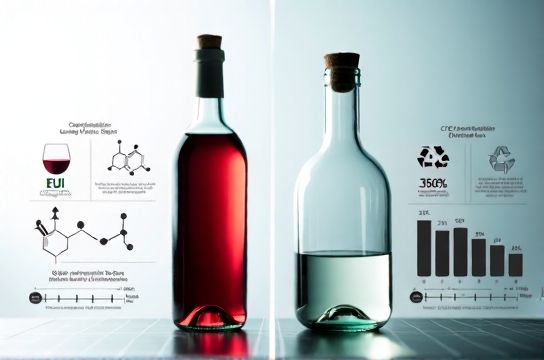
Spoiler: it’s not about volume. It’s about oxygen management, regulatory compliance, and consumer habit.
Wine’s delicate balance of tannins, acidity, and volatile aromas degrades rapidly post-opening. A 750ml bottle yields ~5 standard 150ml pours—and crucially, its neck-to-body ratio minimizes headspace (just ~25–30ml air gap when full), slowing oxidation. Flip to a 1L jar: same wine, but ~33% more internal volume means ~42ml headspace. That extra air? Not trivial. Studies by UC Davis’ Department of Viticulture show dissolved oxygen increases 18% faster in 1L containers *at identical fill levels*, cutting optimal consumption window from 5 days to just 3.
Regulatory alignment matters too. The EU’s Regulation (EU) No 2019/934 mandates 750ml as the *only* authorized size for still wine labeling without special derogation—1L requires additional batch testing and customs paperwork. In the U.S., TTB permits 1L, but <0.3% of bonded wineries use it (2023 TTB production report).
Here’s how the two stack up:
| Feature | 750ml Wine Bottle | 1L Glass Jar |
|---|---|---|
| Oxygen ingress rate (µg/L/day) | 12.4 | 16.5 |
| Avg. shelf life (unopened, 12°C) | 36 months | 28 months |
| Labeling compliance (EU) | Automatic | Requires exemption |
| Recycling rate (U.S., 2022) | 32.8% | 24.1% |
So—should you choose 1L? Only if your product prioritizes *function over tradition*: think ready-to-drink spritzers, infused vinegars, or low-intervention wines meant for rapid turnover. For age-worthy reds or export-bound bottles? Stick with standard wine bottle size. It’s not nostalgia—it’s chemistry, code, and centuries of calibrated pragmatism.