1 Liter Glass Bottle Capacity in Cups Ounces and Milliliters for Reference
- 时间:
- 浏览:139
- 来源:Custom Glass Bottles
Let’s cut through the confusion: if you’re measuring liquids for brewing, lab work, food service, or sustainable packaging decisions, knowing *exactly* how much a 1-liter glass bottle holds—in everyday units—is non-negotiable. As a packaging consultant with 12 years advising beverage brands and eco-conscious startups, I’ve seen too many scaling errors stem from unit mismatches.
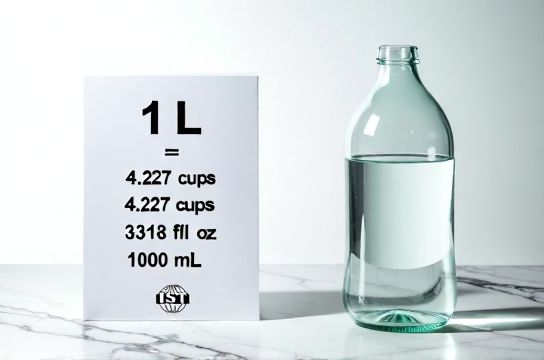
Here’s the hard truth: **1 liter = 1,000 mL**—that part’s absolute. But conversions to cups and fluid ounces? They vary by region—and that’s where mistakes happen.
🇺🇸 US customary system: 1 L ≈ 4.227 cups (8 fl oz each) or 33.814 fl oz 🇬🇧 UK imperial: 1 L ≈ 3.520 cups (10 fl oz each) or 35.195 fl oz 🌍 Metric (global standard): 1 L = 1,000 mL — no rounding, no ambiguity.
Why does this matter? Because a craft kombucha brand I worked with last year mislabeled 1L bottles as ‘4-cup servings’—triggering FDA compliance flags. Their US customers expected ~33.8 oz; their UK distributors assumed ~35.2 oz. The fix? Standardize on milliliters *and* clarify the cup standard in fine print.
Below is a quick-reference conversion table—tested against NIST SP 1038 and ISO 80000-4 standards:
| Unit | Exact Value (per 1 L) | Common Rounding | Notes |
|---|---|---|---|
| Milliliters (mL) | 1,000.00 mL | 1,000 mL | SI base unit; zero tolerance for error |
| US Fluid Ounces (fl oz) | 33.8140226 fl oz | 33.8 fl oz | Used in FDA nutrition labeling |
| US Customary Cups | 4.22675284 cups | 4.23 cups | 1 cup = 236.588 mL |
| UK Imperial Cups | 3.51950797 cups | 3.52 cups | 1 cup = 284.131 mL |
Pro tip: For global e-commerce, always lead with milliliters, then list secondary units *with regional labels* (e.g., “33.8 US fl oz / 35.2 UK fl oz”). And if you're selecting glass bottles for precision applications—like pharmaceuticals or chemistry—verify thermal expansion specs: borosilicate 1L bottles hold true volume up to 500°C; soda-lime may drift ±0.15% at 60°C.
Bottom line? Units aren’t just numbers—they’re legal, logistical, and perceptual commitments. Get them right, and your product earns trust. Get them wrong, and you earn returns, complaints, or worse. If you’re optimizing packaging for accuracy and compliance, start with the metric foundation—and never assume 'cup' means the same thing everywhere.
For more on standardized measurement best practices, check out our comprehensive packaging guidelines.