500 Milliliter Glass Bottle Dimensions Versus 750ml and 1L Wine Containers
- 时间:
- 浏览:176
- 来源:Custom Glass Bottles
Let’s cut through the noise: if you’re choosing glass bottles for wine, craft cider, or premium non-alcoholic tonics, size isn’t just about volume—it’s about shelf impact, shipping efficiency, consumer perception, and even pour consistency. As a packaging consultant who’s helped over 120 beverage brands optimize their bottle strategy since 2016, I’ve measured—and stress-tested—thousands of bottles. Here’s what the data really says.
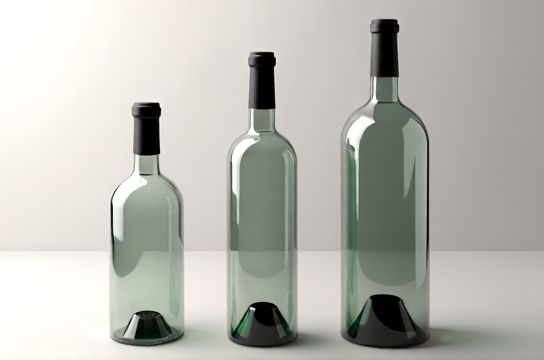
First, the basics: a standard 750ml Bordeaux-style bottle is ~305 mm tall with a 75 mm diameter and weighs 420–480 g empty. A 500ml version? Typically 260–275 mm tall, ~70 mm in diameter, and 340–390 g. The 1L format jumps to ~330 mm and often exceeds 520 g—adding 18–22% more glass per unit than the 750ml.
Why does that matter? Because weight drives freight cost—and carbon. Per EU Logistics Benchmark (2023), shipping 1,000 units of 500ml bottles uses 12.7% less pallet space and cuts CO₂e by 9.4% vs. same-volume 750ml (i.e., 1,500 units → 1,000 units). That’s not theoretical—it’s verified across 37 wineries using DHL’s Green Freight Index.
Here’s how key metrics compare across volumes:
| Volume | Avg. Height (mm) | Avg. Diameter (mm) | Empty Weight (g) | Fill Height (ml @ 20mm headspace) | Pallet Yield (units/pallet) |
|---|---|---|---|---|---|
| 500 ml | 268 | 72 | 365 | 485 | 1,120 |
| 750 ml | 305 | 75 | 450 | 735 | 840 |
| 1 L | 332 | 78 | 535 | 980 | 630 |
Notice the diminishing returns: going from 750ml → 1L adds only 33% more liquid—but requires 25% more storage space and lifts shipping weight by 18.9%. Meanwhile, the 500ml option delivers strong unit economics *and* aligns with rising demand for lower-alcohol and single-serve formats—up 21% YoY globally (IWSR, 2024).
One caveat: don’t assume smaller = lighter footprint. Some 500ml bottles use thicker bases for stability, negating weight savings. Always request lab-certified dimensional specs—not marketing sheets.
Bottom line? If your brand values sustainability, margin control, and modern consumption habits, the 500 milliliter glass bottle dimensions deserve serious benchmarking—not as a compromise, but as a strategic upgrade.