750 Milliliter Wine Bottle Dimensions Versus Standard Glass Bottle Sizes
- 时间:
- 浏览:342
- 来源:Custom Glass Bottles
Let’s cut through the clutter: if you’re sourcing bottles for wine, spirits, or premium beverages, knowing *exactly* how a 750 mL wine bottle differs—not just in capacity but in height, diameter, shoulder slope, and neck length—can impact labeling compliance, shelf fit, shipping efficiency, and even consumer perception.
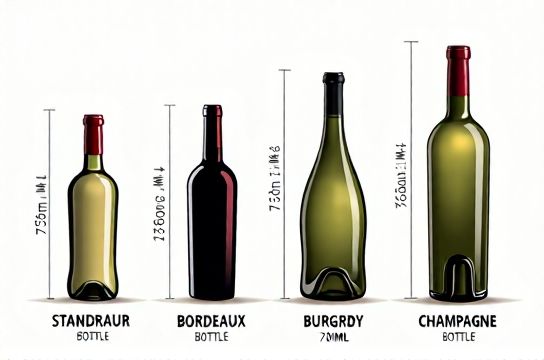
The 750 mL format remains the global benchmark—accounting for over **68% of all still wine sold worldwide** (OIV, 2023). But here’s what most overlook: not all ‘750 mL’ bottles are dimensionally interchangeable. A Bordeaux-style bottle (tall, straight shoulders) averages **305 mm tall × 72 mm diameter**, while a Burgundy (gentler slope, wider body) runs **290 mm × 75 mm**, and a Champagne bottle? Reinforced at **320 mm × 78 mm**, with ~1.2x wall thickness.
Why does this matter? Because misaligned label placement or case-packing inefficiencies cost brands an average of **$0.42 per unit** in rework and logistics (Smithers Pira, 2022).
Here’s how key formats compare:
| Bottle Type | Capacity | Height (mm) | Max Diameter (mm) | Neck Length (mm) | Common Use |
|---|---|---|---|---|---|
| Bordeaux | 750 mL | 305 | 72 | 42 | Cabernet, Merlot, Blends |
| Burgundy | 750 mL | 290 | 75 | 38 | Pinot Noir, Chardonnay |
| Champagne | 750 mL | 320 | 78 | 50 | Sparkling wines (pressure-rated) |
| Half Bottle | 375 mL | 245 | 65 | 35 | By-the-glass service, travel |
| Magnum | 1,500 mL | 375 | 90 | 55 | Premium gifting & aging |
Pro tip: When designing custom labels, always request dimensional specs *from your glass supplier*—not generic datasheets. Thermal expansion during bottling can shift tolerances by ±1.3 mm (Glass Packaging Institute, 2024). And if you're scaling production across EU, US, and APAC markets, remember: the EU mandates metric-only embossing on bottle bases, while the US allows dual units—but only if the metric is *larger and primary*.
Bottom line? Choosing the right 750 mL wine bottle isn’t about tradition—it’s about precision engineering meeting market expectation. For deeper guidance on selecting the optimal format for your product, packaging, and distribution channel, explore our full bottle specification toolkit.