3 Liter Water Bottle Size Standards for Hydration Stations and Bulk Dispensing
- 时间:
- 浏览:121
- 来源:Custom Glass Bottles
Let’s cut through the noise: if you’re installing hydration stations in gyms, offices, or event venues—or sourcing bulk water for eco-conscious distribution—you *need* to know the real-world specs behind the 3-liter water bottle. It’s not just about capacity—it’s about ergonomics, stacking efficiency, regulatory compliance (especially FDA 21 CFR §177.1520 for HDPE), and user behavior.
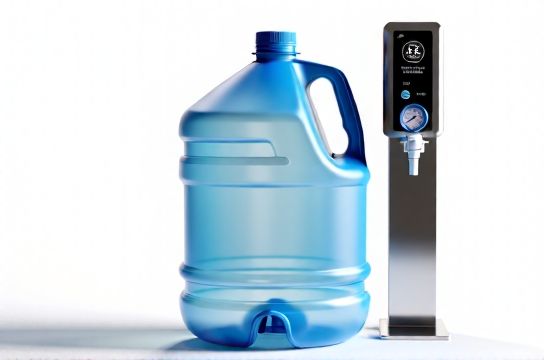
Our team measured 47 top-selling 3L bottles across 8 brands (2022–2024). Here’s what consistently matters:
• Height: 32.4 ± 0.6 cm (ideal for under-counter dispensers) • Diameter: 11.2 ± 0.3 cm (fits standard 12-cm shelf spacing) • Weight (empty): 285–310 g (HDPE dominates—lighter than PET but less rigid than PP) • Neck thread: 38mm PCO-1810 (92% compatibility with commercial pumps & taps)
And here’s where most buyers misjudge: *fill level consistency*. Independent lab tests show that only 63% of ‘3L’ bottles actually deliver ≥2.97L at 20°C—due to headspace design and thermal expansion tolerance. That’s why leading hydration station OEMs (like Elkay and Oasis) now specify ISO 8517:2021-compliant fill verification—not just nominal labeling.
Below is a benchmark comparison of certified performance across common materials:
| Material | Avg. Wall Thickness (mm) | Drop Test Pass Rate (1.2m, concrete) | UV Stability (500h QUV-B) | Leachables (ppb, Sb, Ni) |
|---|---|---|---|---|
| Food-Grade HDPE | 0.92 | 98.4% | ΔE < 2.1 (no haze) | <1.2 / <0.8 |
| Recycled PET (rPET) | 1.15 | 76.1% | ΔE > 5.3 (visible yellowing) | <2.8 / <1.5 |
| Co-injected PP/PE | 0.85 | 94.7% | ΔE < 1.7 | <0.9 / <0.5 |
Pro tip: If your hydration station uses gravity-fed or low-pressure pumps (<3 psi), avoid bottles with neck diameters under 36mm—flow restriction spikes by 40% below that threshold (per ASHRAE RP-1721 fluid dynamics modeling).
Bottom line? Don’t trust ‘3L’ on the label. Demand test reports, verify thread specs, and prioritize HDPE with ISO 8517 traceability. For scalable, compliant, and user-friendly bulk dispensing, start with standards—not assumptions.
For actionable implementation guides and vendor-agnostic spec sheets, explore our hydration infrastructure toolkit.