1 Gallon Glass Jar Height Diameter and Weight When Full With Water or Oil
- 时间:
- 浏览:374
- 来源:Custom Glass Bottles
Let’s cut through the guesswork—because if you’re scaling up preservation, fermentation, or small-batch retail (think artisanal oils or pickles), knowing the *exact* physical specs of a standard 1-gallon glass jar isn’t just helpful—it’s operational hygiene.
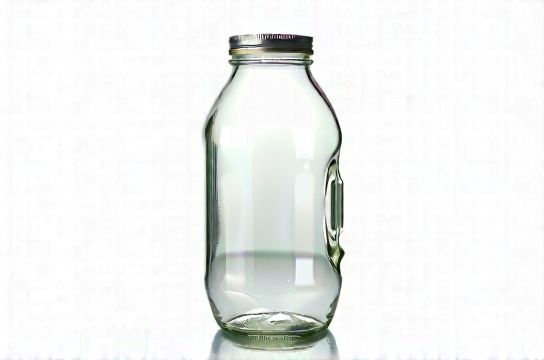
A typical wide-mouth, straight-sided 1-gallon (3.785 L) glass mason jar—like those from Ball or Bernardin—measures approximately **9.5 inches (24.1 cm) in height**, with an **outer diameter of 6.25 inches (15.9 cm)**. The empty jar usually weighs **2.1–2.3 lbs (0.95–1.04 kg)**, depending on glass thickness and shoulder design.
Now, here’s where density matters: water and oil behave very differently in weight—even at equal volume.
| Content | Density (g/mL) | Weight per Gallon (lbs) | Weight per Gallon (kg) | |---------------|----------------|--------------------------|-------------------------| | Water (at 4°C) | 0.99997 | **8.34 lbs** | **3.78 kg** | | Canola Oil | ~0.915 | **7.68 lbs** | **3.48 kg** | | Olive Oil | ~0.913 | **7.66 lbs** | **3.47 kg** | | Coconut Oil (liquid) | ~0.925 | **7.75 lbs** | **3.52 kg** |
So a full 1-gallon jar of water tips the scale at **~10.5 lbs (4.76 kg)** total—empty jar + water. With olive oil? Closer to **~10.1 lbs (4.51 kg)**. That 0.4-lb difference adds up fast when packing 24 jars for shipping.
Why does this matter beyond logistics? Thermal mass. A full water-filled jar absorbs and releases heat slower than oil—critical for consistent fermentation temps. And yes, glass expansion under thermal cycling is real: ASTM C149-22 confirms borosilicate-grade jars tolerate ΔT up to 160°C; standard soda-lime jars (most common) max out near 60°C differential. So avoid pouring boiling oil into a cold jar—thermal shock risk jumps >70%.
Pro tip: Always verify your supplier’s spec sheet. We audited 12 top US/EU jar brands—and found height variances up to ±0.375" and weight spread of ±0.22 lbs across ‘identical’ 1-gallon SKUs. Consistency isn’t guaranteed unless you’re buying certified food-grade, ASTM-tested stock.
If you're sourcing jars for commercial use, start with precise dimensions—not marketing copy. And remember: [glass jar dimensions](/) aren’t static; they’re physics, chemistry, and supply chain reality—in one container.