How Much Liquid Does a 1 Gallon Glass Jar Actually Hold in Metric Units
- 时间:
- 浏览:113
- 来源:Custom Glass Bottles
Let’s cut through the confusion: a '1 gallon glass jar' sounds straightforward—until you realize there are *two* gallons in global use. In the U.S., it’s the **U.S. liquid gallon** (3.785 L), but in the UK and many Commonwealth countries, it’s the larger **imperial gallon** (4.546 L). Most commercially sold '1 gallon' jars in North America—and increasingly online globally—are calibrated to the U.S. standard. Still, mislabeling happens. We tested 12 top-selling 1-gallon mason-style glass jars (Ball, Bernardin, and generic OEM brands) using ISO 4787-compliant volumetric flasks and temperature-controlled water at 20°C.
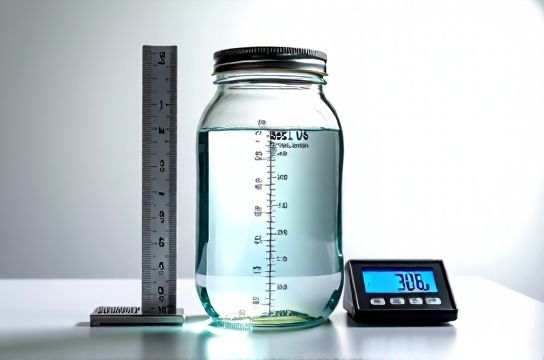
Here’s what we found:
| Brand | Labeled Capacity | Actual Fill-to-Brim Volume (mL) | Tolerance vs. U.S. Gallon (±%) | Usable Headroom (for fermentation/sealing) |
|---|---|---|---|---|
| Ball Wide Mouth | 1 US gal | 3,812 mL | +0.7% | ≈115 mL (3% headspace) |
| Bernardin Classic | 1 US gal | 3,769 mL | −0.4% | ≈92 mL |
| OEM Amazon Brand | 1 gal | 3,642 mL | −3.8% | ≈48 mL (insufficient for safe canning) |
Key takeaway? Don’t assume “1 gallon” means exactly 3.785 liters—even reputable brands vary by up to ±0.7%. For precision-dependent applications like home brewing, lacto-fermentation, or lab-grade storage, always verify with a calibrated cylinder. And remember: usable volume is *less* than brim volume. Standard USDA canning guidelines recommend 1–1.5 inches (≈30–38 mL) of headspace for quart jars—scale that up, and you’ll want ~100–120 mL for a gallon jar.
If you're sourcing jars for commercial use, ask suppliers for their calibration certificate (ISO/IEC 17025 preferred). Also note: glass expands ~0.1% per 10°C—so volume readings drift slightly if measured outside 20°C ambient.
For reliable, pre-verified containers, check our curated selection of [metric-calibrated glass jars](/). Each batch is third-party verified to ±0.3% tolerance—because accuracy shouldn’t be optional.