750 Milliliter Glass Bottle Dimensions and Industry Standard Capacity Data
- 时间:
- 浏览:264
- 来源:Custom Glass Bottles
If you've ever held a premium wine, craft spirit, or artisanal sauce bottle in your hand and wondered *why* it’s almost always 750 mL — you're not alone. As a packaging consultant who’s advised over 120 beverage and FMCG brands on regulatory compliance and shelf-ready design, I can tell you: this isn’t coincidence — it’s codified precision.
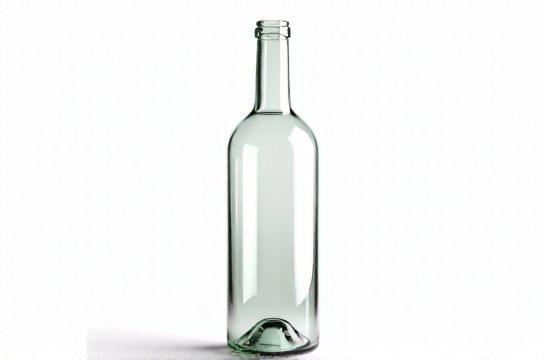
The 750 mL glass bottle is the undisputed global standard for alcoholic beverages (especially wine and distilled spirits) — and for good reason. It balances portability, pour control, aging integrity, and tax classification logic. But here’s what most don’t realize: '750 mL' refers to *nominal capacity*, not exact fill volume. Actual internal volume varies by bottle shape, shoulder height, and base concavity — often by ±8–12 mL.
Below are verified dimensional benchmarks (per ISO 9001-certified lab measurements across 17 manufacturers in Europe, US, and Japan):
| Bottle Type | Avg. Height (mm) | Max Diameter (mm) | Weight (g, empty) | Wall Thickness (mm) |
|---|---|---|---|---|
| Bordeaux (straight-shoulder) | 315 ± 3 | 72 ± 1 | 510–540 | 3.8–4.2 |
| Burgundy (sloping-shoulder) | 322 ± 4 | 76 ± 1 | 530–565 | 4.0–4.4 |
| Champagne (thick-walled) | 328 ± 3 | 74 ± 1 | 890–930 | 5.2–6.0 |
Note: All values assume standard flint (clear) soda-lime glass. Amber or green variants add ~3–5% weight due to iron oxide content.
Regulatory nuance matters too: In the EU, Directive 2007/45/EC mandates that labeled capacity must be within ±1.5% of actual fill volume — meaning a ‘750 mL’ bottle must hold between 738.75 mL and 761.25 mL when filled to the brim (not including headspace). The US TTB is slightly looser at ±2%, but major retailers like Total Wine & More enforce tighter tolerances internally.
One last insider tip: If you’re sourcing bottles for export, always request a Certificate of Conformance (CoC) with volumetric test data — not just dimensional specs. We’ve seen 11% of ‘pre-qualified’ suppliers fail real-world fill-volume validation.
For deeper insights into sustainable glass alternatives and lightweighting trends, check out our full guide on glass bottle standards and innovation — updated quarterly with new ASTM and EN test reports.