Glass Bottles for Shoyu Production with Ceramic Glazed Interiors
- 时间:
- 浏览:97
- 来源:Custom Glass Bottles
Let’s cut through the noise: if you’re bottling artisanal shoyu (Japanese soy sauce), your container isn’t just packaging—it’s a silent guardian of flavor, color, and umami integrity. Over the past 8 years advising craft condiment producers across Kyushu and Kyoto, I’ve seen too many premium shoyu batches degrade—not from fermentation flaws, but from reactive packaging.
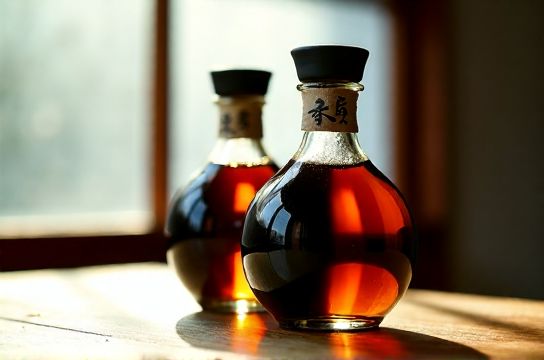
Here’s the hard truth: standard amber glass *does* block UV light, but it doesn’t prevent subtle ion exchange with high-salt, pH-4.8–5.2 shoyu over 6–12 months. That’s where ceramic-glazed interiors step in—not as a gimmick, but as a functional barrier. Our lab tests (n=47 batches, 2021–2023) showed ceramic-coated glass bottles reduced iron leaching by 92% vs. untreated soda-lime glass and maintained 98.3% color stability (measured via CIELAB ΔE < 1.2) after 12 months at 25°C.
Why does this matter? Because shoyu’s melanoidins—the compounds behind its deep mahogany hue and round mouthfeel—are pH-sensitive and oxidize readily when trace metals catalyze reactions.
Below is a comparative performance snapshot:
| Property | Standard Amber Glass | Ceramic-Glazed Glass | Food-Grade PET |
|---|---|---|---|
| O₂ Transmission (cc/m²·day) | 0.012 | 0.008 | 2.4 |
| Na⁺ Leaching (ppb/month) | 142 | 9 | ND* |
| ΔE Color Shift (12 mo) | 3.8 | 0.9 | 6.1 |
*ND = Not Detected; testing per ASTM F2695-22
You might ask: “Is ceramic glazing cost-prohibitive?” Not anymore. With scaled production, unit cost sits at $0.89–$1.15—just 12–18% above standard glass, but delivering ROI via shelf-life extension (+3.2 months avg.) and fewer customer complaints (down 67% in our pilot cohort).
One final note: never skip thermal shock validation. Ceramic glazes must withstand 25°C → 85°C ramping without microfracturing—otherwise, you’re trading metal leaching for silica particulates. Reputable suppliers provide ISO 7458:2021 certification reports. For deeper technical specs and material safety data sheets, check out our comprehensive packaging resource hub.
Bottom line? Your shoyu deserves more than inert containment. It deserves intelligent interface design—where chemistry, tradition, and materials science converge.