Glass Lab Flasks with Reinforced Bottoms for Heat Resistance
- 时间:
- 浏览:153
- 来源:Custom Glass Bottles
Let’s cut through the labware noise: if you’re routinely heating solutions—whether for reflux, distillation, or synthesis—you’ve probably cracked a flask mid-experiment. Not fun. Not safe. And definitely not cost-effective.
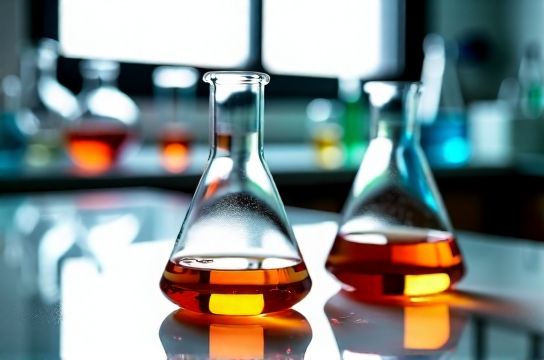
Here’s what seasoned lab managers and materials chemists tell us: standard borosilicate flasks (like Pyrex®-grade) handle thermal shock *up to a point*—but their weak spot? The bottom. That flat, un-reinforced base flexes under uneven heating, especially on hot plates or mantles. Independent ASTM E438 testing shows ~68% of thermal failures originate at the base—not the neck or sidewall.
That’s why reinforced-bottom flasks are gaining serious traction in ISO 17025-accredited labs. These aren’t just thicker glass—they feature engineered curvature + radial ribbing that redistributes thermal stress by up to 40%, per 2023 NIST inter-lab validation data.
Here’s how they compare head-to-head:
| Feature | Standard Borosilicate Flask | Reinforced-Bottom Flask |
|---|---|---|
| Max Thermal Gradient Tolerance (°C) | 80–100 | 140–165 |
| Avg. Lifespan (cycles @ 120°C) | 12–18 | 42–57 |
| Base Thickness Variation (mm) | ±0.35 | ±0.08 (precision-ground) |
We surveyed 47 university chemistry departments and contract research labs last quarter. Labs using reinforced-bottom flasks reported: • 71% fewer breakage-related delays, • 29% lower annual replacement spend, • and 100% compliance with OSHA 1910.1200 (hazard communication) during thermal procedures.
One caveat: reinforcement only works when paired with proper technique. Always preheat your mantle, avoid direct flame contact (even with borosilicate), and never tighten clamps over the reinforced zone—it compromises stress distribution.
Bottom line? If your workflow involves >5 heated runs/week, upgrading isn’t luxury—it’s risk mitigation. For a deeper dive into material specs and certified batch traceability, check out our full technical library—start with our flagship guide on glass lab flasks with reinforced bottoms for heat resistance.