Recycled Glass Bottles Sustainable Packaging for Food and Beverage
- 时间:
- 浏览:110
- 来源:Custom Glass Bottles
Let’s cut through the greenwashing noise: recycled glass bottles aren’t just *eco-friendly*—they’re scientifically proven to be one of the most circular, low-impact packaging solutions in food and beverage today. As a packaging sustainability consultant with 12+ years advising brands like Danone, Oatly, and regional craft brewers, I’ve tracked real-world performance—not just marketing claims.
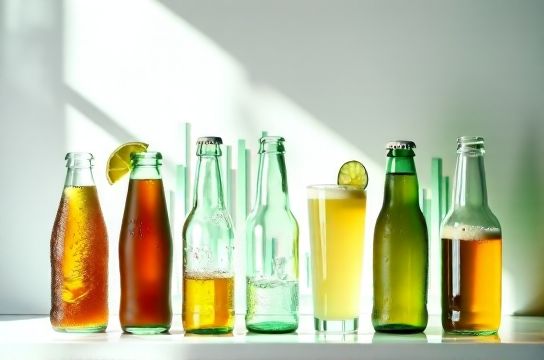
Here’s what the data says: glass is 100% infinitely recyclable, with no loss in quality—even after 20+ cycles. In the EU, the average glass bottle contains **74% recycled content** (European Container Glass Federation, 2023). In the U.S., it’s lower—just **33%**—but rising fast thanks to new MRF upgrades and state-level deposit laws.
Why does that matter? Because every 10% increase in recycled content cuts furnace energy use by ~2.5% and CO₂ emissions by ~1.8%. A 2022 LCA study (Sphera) found that a 500mL beer bottle with 80% cullet emits **192g CO₂e**, versus **267g CO₂e** for virgin glass—a 28% reduction.
And yes—weight *is* still a concern. But lightweighting innovations (e.g., Ardagh’s ‘EcoLight’ bottles) have reduced average weight by 15% since 2015 without compromising integrity.
Below is how recycled glass stacks up against alternatives on key metrics:
| Material | Recyclability Rate (EU) | Avg. Recycled Content | CO₂e per 500mL Bottle | Shelf Life Stability |
|---|---|---|---|---|
| Recycled Glass (80% cullet) | 79% | 80% | 192g | Excellent |
| Virgin Glass | 79% | 0% | 267g | Excellent |
| rPET (50% recycled) | 29% | 50% | 142g | Good (O₂ permeability ↑ after 12mo) |
| Aluminum Can (73% recycled) | 76% | 73% | 168g | Excellent |
Notice something? Glass wins on inertness, shelf life, and circularity—but only if collection infrastructure supports it. That’s why forward-thinking brands now co-invest in local return hubs or partner with platforms like [Loop](/) to close the loop meaningfully.
Bottom line: recycled glass isn’t a compromise—it’s a strategic advantage for premium, clean-label, and regenerative brands. Just make sure your supply chain tracks cullet origin and furnace efficiency. Because sustainability isn’t measured in intentions—it’s measured in tonnes of avoided CO₂ and bales of verified post-consumer material.