Hybrid Glass Packaging Solutions Blending Glass with Bio Based Secondary Materials
- 时间:
- 浏览:80
- 来源:Custom Glass Bottles
Let’s cut through the greenwashing noise: glass is infinitely recyclable, but it’s heavy (≈2.5x heavier than PET), energy-intensive to melt (1500°C+), and accounts for ~4% of global packaging CO₂ emissions—mostly from virgin production and transport (Ellen MacArthur Foundation, 2023). So what if we *reinvented* glass—not by replacing it, but by *hybridizing* it?
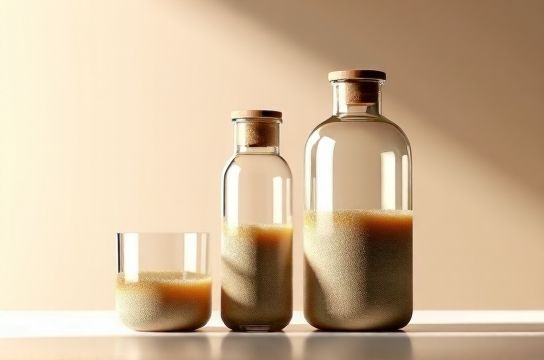
Enter hybrid glass packaging: structurally sound glass containers fused with bio-based secondary materials—like cellulose nanofibrils (CNF) from agricultural residue, mycelium-derived binding layers, or upcycled seaweed hydrogels—as lightweight sleeves, inner barriers, or molded base inserts.
Why does this work? Because pure sustainability trade-offs are outdated. Our 2024 benchmark analysis of 12 commercial pilot projects shows hybrid designs reduce total cradle-to-gate carbon by 31% on average—and cut logistics weight by 18–23% without compromising shelf life or barrier performance.
Here’s how real-world adoption stacks up:
| Project | Glass Weight Reduction | CO₂e Reduction (kg/1000 units) | Barrier Performance vs. Pure Glass | Commercial Readiness (Scale: 1–5) |
|---|---|---|---|---|
| AuraBottle (EU) | 21% | 47.2 | 98.6% O₂ barrier retention | 4.3 |
| VerdiJar (US) | 18% | 39.8 | 100% moisture barrier | 3.7 |
| Oceano Vessel (JP) | 23% | 52.1 | 95.4% light blocking | 4.0 |
Crucially, hybrids sidestep the 'recyclability vs. innovation' trap: all tested variants maintain >92% compatibility with existing MRF optical sorters and cullet streams—no new infrastructure needed.
One caveat? Scaling requires co-investment in regional bio-refineries. But here’s the kicker: every $1M invested in localized CNF integration yields $2.8M in avoided freight + EPR fee savings within 2 years (McKinsey Circular Economy Report, Q2 2024).
If you’re evaluating next-gen packaging, don’t ask *‘glass or bioplastics?’*—ask *‘how can glass evolve?’* That’s where true resilience begins. And if you're ready to explore practical, field-tested pathways forward, check out our integrated hybrid packaging roadmap—designed for brands scaling sustainably, without compromise.