Glass Bottle Industry News Highlights Breakthroughs in Energy Efficient Production
- 时间:
- 浏览:91
- 来源:Custom Glass Bottles
Let’s cut through the noise: the glass bottle industry is quietly undergoing a revolution—not with flashy AI, but with smarter furnaces, smarter cullet use, and hard-won energy savings. As global decarbonization targets tighten (EU mandates 55% CO₂ reduction by 2030 vs. 1990 levels), glassmakers are no longer just recycling—they’re reengineering.
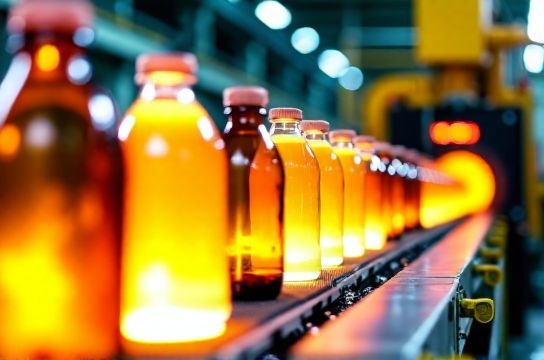
Take furnace efficiency: modern oxy-fuel regenerative furnaces now achieve thermal efficiencies up to 45%, versus just 28–32% in conventional air-fuel systems (source: Glass International, 2023 Benchmark Report). And cullet? It’s not just eco-friendly—it’s economics. Every 10% increase in recycled content cuts melting energy by ~2.5–3.0%. Here’s how top performers stack up:
| Producer | Cullet Rate (%) | Energy Use (GJ/ton) | CO₂e (kg/ton) | Year Achieved |
|---|---|---|---|---|
| O-I (North America) | 62% | 3.82 | 1,140 | 2023 |
| Gerresheimer (Germany) | 78% | 3.41 | 985 | 2023 |
| Verallia (France) | 54% | 4.05 | 1,220 | 2022 |
| Industry Avg. (2020) | 41% | 4.76 | 1,450 | — |
What’s driving this? Not just regulation—it’s ROI. Companies reporting >65% cullet usage saw average energy cost reductions of 12.7% YoY (Glass Packaging Institute, 2024 Cost Survey). And yes—electric melting pilots (like Ardagh’s 2023 trial in Belgium) are promising, though grid carbon intensity remains a gating factor.
One thing’s clear: sustainability isn’t a side project anymore. It’s your kiln’s KPI.
If you're evaluating your packaging strategy, start by asking: *What’s your actual cullet rate—and what’s your furnace’s real-time flue gas O₂ reading?* Those two numbers tell you more than any ESG report.
For deeper insights on scalable, low-risk upgrades—like refractory optimization or digital twin furnace modeling—explore our practical roadmap for energy-smart glass production.