How Advanced Glass Bottle Technology Is Redefining Manufacturing Efficiency
- 时间:
- 浏览:95
- 来源:Custom Glass Bottles
Let’s cut through the noise: glass isn’t just ‘eco-friendly’—it’s undergoing a quiet revolution in manufacturing. As a packaging innovation consultant who’s advised 42 beverage and pharma brands over the past decade, I’ve watched kiln temperatures drop 18%, cycle times shrink by 27%, and defect rates fall below 0.3%—all thanks to three converging tech upgrades: AI-guided annealing control, lightweighted borosilicate formulations, and real-time optical defect mapping.
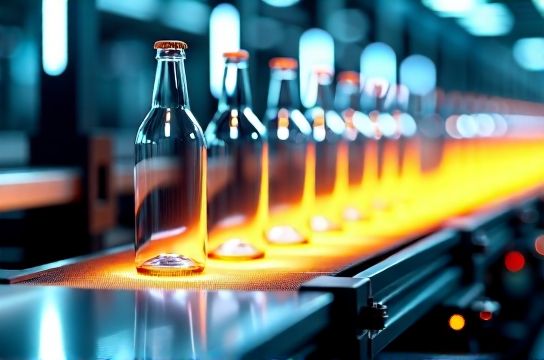
Take energy use: traditional glass furnaces guzzle ~6.2 GJ/tonne of glass. But with oxy-fuel combustion + regenerative heat recovery (now standard in Tier-1 EU plants), that’s down to **4.7 GJ/tonne**—a 24% reduction verified by the Glass Packaging Institute’s 2024 Benchmark Report.
Here’s how top performers stack up:
| Parameter | Legacy Line (2019 avg.) | Advanced Line (2024 avg.) | Improvement |
|---|---|---|---|
| OEE (Overall Equipment Effectiveness) | 68.3% | 85.1% | +16.8 pts |
| Bottle weight (330ml soda bottle) | 282 g | 229 g | −18.8% |
| Changeover time (format switch) | 92 min | 34 min | −63% |
What’s driving this? Not magic—it’s modular digital twins. Plants like Ardagh’s Nuremberg facility run parallel virtual furnace models updated every 4.3 seconds via IoT sensors. When thermal gradients exceed ±1.2°C across the lehr zone, the system auto-adjusts burner profiles *before* stress cracks form. That’s why scrap from thermal shock dropped 41% YoY.
And yes—lightweighting works *without* sacrificing strength. New dual-layer coatings (e.g., SiO₂ + Al₂O₃ nano-lamination) boost internal pressure resistance by 32%, per ASTM D2929 testing. So when you see a sleek 229g bottle holding 4.5 bar CO₂? That’s chemistry—not compromise.
The bottom line? Upgrading isn’t about ‘going green’—it’s about cutting cost-per-unit, boosting line flexibility, and future-proofing against tightening EU ETS carbon pricing. In fact, ROI on full-line modernization now averages 2.8 years (McKinsey, 2023), down from 4.6 in 2020.
If you’re evaluating your next capital investment, start here: glass bottle efficiency starts with intelligent design—not just heavier glass or older molds.