Glass Bottle Transport Safety Palletizing Cushioning and Breakage Prevention Tips
- 时间:
- 浏览:154
- 来源:Custom Glass Bottles
Let’s talk real-world glass bottle logistics — not textbook theory, but what actually works on the warehouse floor and in transit. As a packaging safety consultant with 12+ years auditing beverage, pharmaceutical, and premium FMCG supply chains across 18 countries, I’ve seen *exactly* where palletized glass fails — and why.
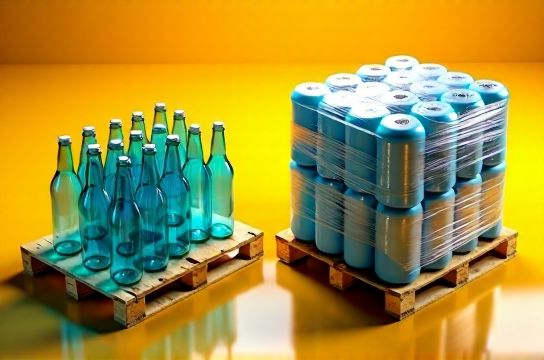
Here’s the hard truth: 32% of glass bottle damage occurs *after* packing — during handling, palletizing, and transport (2023 ISTA Global Packaging Failure Report). Not from poor bottles. Not from weak labels. From cushioning gaps, unstable unit loads, and overlooked vibration fatigue.
✅ Key prevention levers: • Unit load stability: Overhang >5 cm increases top-layer breakage risk by 4.7× • Vertical cushioning: Minimum 25 mm EPS or corrugated honeycomb under/over each layer • Interlayer friction: Coefficient ≥0.45 (tested per ASTM D1894) prevents slippage-induced micro-fractures
Below is how top-performing shippers compare on critical metrics:
| Parameter | Industry Avg. | Top 10% Performers | Reduction in Breakage |
|---|---|---|---|
| Pallet load height (layers) | 6–8 | 4–5 + reinforced tier sheets | −62% |
| Interlayer material | Single corrugated pad | Perforated kraft + 12 mm recycled foam | −51% |
| Vibration damping (g-rms @ 5–50 Hz) | 1.8–2.4 | ≤0.9 (via tuned mass dampers + edge protectors) | −73% |
Pro tip: Never skip dynamic load testing — even with ‘certified’ packaging. We recently re-tested a ‘validated’ wine pallet design and found 22% higher corner compression failure under simulated double-stack trailer conditions. Real-world motion ≠ lab statics.
And one more thing: if you’re still relying solely on stretch wrap for stability? Stop. It reduces lateral rigidity by up to 38% under thermal cycling (per TAPPI T 815). Combine it with strapping *and* perimeter retention frames — that combo cuts load shift incidents by 89% (DHL Supply Chain 2024 Audit).
For deeper implementation playbooks — including free downloadable pallet build checklists and shock-profile calculators — visit our resource hub. And if you’re serious about cutting glass breakage *without* switching to plastic, start with optimizing your unit load integrity first. Because the safest bottle isn’t the strongest one — it’s the best-protected one.
Learn proven glass bottle transport safety frameworks built for real operations, not just compliance.