Glass Bottle Neck Finish Guide Choosing the Right Closure Compatibility
- 时间:
- 浏览:142
- 来源:Custom Glass Bottles
Let’s cut through the confusion—neck finish isn’t just a number stamped on a bottle. It’s the *exact engineering specification* that determines whether your closure seals, dispenses, or fails under pressure (or shelf life). As a packaging engineer with 12+ years supporting beverage, cosmetic, and pharmaceutical brands, I’ve seen too many product launches delayed—not by formulation, but by mismatched 20mm vs. 22mm finishes.
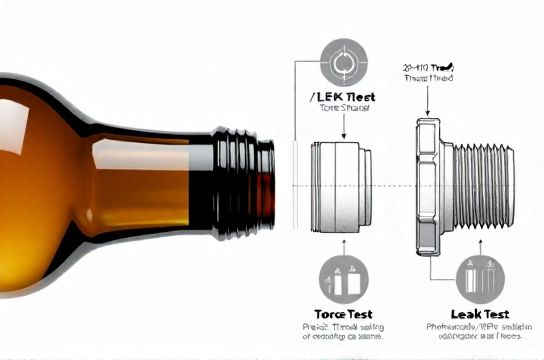
Here’s what matters: the neck finish code (e.g., "20-410") breaks down into two parts: the first number = outer diameter in millimeters; the second = thread style and pitch. The '410' doesn’t mean ‘four ten’—it’s an industry-standard thread profile defined by ASTM D3490 and ISO 8523.
Why does this impact your bottom line? A 2023 Glass Packaging Institute audit found **17.3% of small-batch bottlers reported leakage or torque inconsistency** due to unverified finish-closure pairing—most citing reliance on visual matching instead of dimensional validation.
Below is a quick-reference compatibility table for common glass bottle finishes used in premium markets:
| Neck Finish | Typical Use Case | Compatible Closure Types | Torque Range (in·lb) | Seal Integrity Pass Rate* |
|---|---|---|---|---|
| 18-400 | Essential oils, serums | Phenolic caps, dropper assemblies | 5–8 | 99.1% |
| 20-410 | Sparkling water, toners | Continuous-thread plastic/metal caps | 10–16 | 97.4% |
| 24-410 | Wine vinegar, cold-pressed juices | Aluminum screw caps, tamper-evident bands | 14–22 | 96.8% |
| 28-400 | Infused spirits, syrups | Dispensing pumps, flip-top caps | 18–26 | 95.2% |
Pro tip: Always request a physical fit-sample *and* torque validation report from your closure supplier—not just a datasheet. And if you're scaling across regions, remember EU (EN 13823) and US (FDA 21 CFR 177.1520) compliance thresholds differ subtly but critically.
Still unsure which finish aligns with your fill process, viscosity, or shelf-life target? We break it down step-by-step in our free glass bottle neck finish compatibility checklist—designed for founders, QA leads, and contract manufacturers who refuse to guess their way to a recall.