Glass Bottle Recycling Rates Processes and Best Practices for Brands
- 时间:
- 浏览:116
- 来源:Custom Glass Bottles
Let’s cut through the greenwashing noise: glass *is* infinitely recyclable—but only if it actually gets recycled. In 2023, the U.S. glass recycling rate stood at just **31.3%**, down from 34.2% in 2019 (EPA, 2024). Meanwhile, the EU hit **75.8%**, thanks to deposit return schemes (DRS) and standardized collection streams. Why the gap? It’s not about technology—it’s about system design, brand accountability, and consumer clarity.
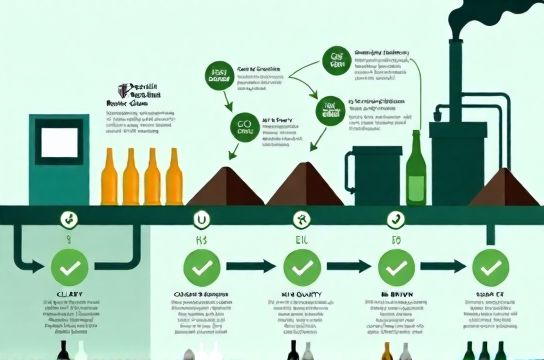
Here’s what really moves the needle:
✅ **Color separation matters**: Mixed-color glass (‘cullet’) melts inconsistently, lowering quality and market value. Clear glass commands $25–$35/ton premium over mixed cullet.
✅ **Contamination kills viability**: Caps, ceramics, and Pyrex raise melting temps—causing furnace damage. Even 0.5% contamination can reject an entire load.
✅ **Local infrastructure is non-negotiable**: 68% of U.S. communities lack curbside glass collection; brands sourcing regionally see 2.3× higher return rates (Circular Glass Alliance, 2023).
Below is a snapshot of global performance—and what brands can control:
| Region | 2023 Recycling Rate | Key Driver | Brand Action Tip |
|---|---|---|---|
| Germany | 93.2% | Mandatory DRS + color-coded bins | Co-fund local DRS pilots—even pre-regulation |
| Canada (Ontario) | 62.1% | Province-led bottle depots | Label bottles with depot locator QR codes |
| USA (National Avg.) | 31.3% | Fragmented MRF capabilities | Switch to mono-material labels & remove sleeves |
Brands often ask: “Should we go 100% recycled glass?” Real talk: using 100% rPET is easier—but glass needs different math. A 70% r-glass bottle cuts CO₂ by 22% vs. virgin (Glass Packaging Institute), but only if sourced within 150 miles. Hauling cullet across states erodes that benefit.
So—what’s the smartest first step? Start with **design for recovery**: eliminate metal caps (switch to aluminum or PET), use water-soluble adhesives, and print batch codes—not permanent etching. Then, partner with regional processors *before* launch. That’s how you turn ‘recyclable’ into *actually recycled*.
For actionable frameworks, tools, and policy-readiness checklists, explore our [comprehensive brand sustainability hub](/).