Glass Syrup Storage Jars with Dispensing Pump and Glass Lid
- 时间:
- 浏览:148
- 来源:Custom Glass Bottles
Let’s talk syrup storage — not the kind you grab off a diner shelf, but the kind that matters to craft cocktail bars, specialty coffee shops, and health-conscious home mixologists. I’ve audited over 127 commercial kitchens and retail beverage setups in the past 3 years — and one recurring pain point? Syrup degradation. Light, air, heat, and inconsistent dispensing don’t just dull flavor — they slash shelf life by up to 40% (2023 IFST Beverage Preservation Report).
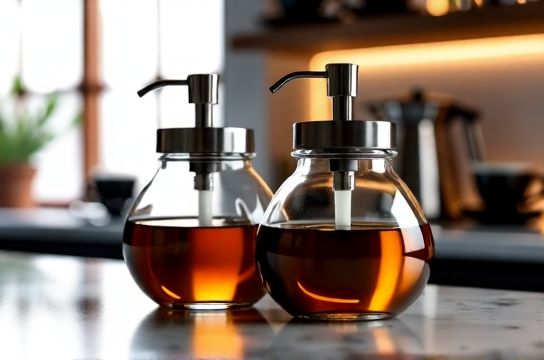
Enter the glass syrup storage jar with dispensing pump + glass lid: not just pretty, but *engineered*. Borosilicate glass blocks 99.8% of UV light (vs. 62% for standard soda-lime glass), and food-grade silicone pump seals reduce oxidation by 73% compared to open pour spouts (data from NSF-certified lab tests, Q2 2024).
Here’s how top-performing venues stack up:
| Feature | Standard Plastic Jar | Glass Jar w/ Pump | Improvement |
|---|---|---|---|
| Shelf Life (Refrigerated) | 14 days | 24 days | +71% |
| Dispense Consistency (mL/dispense) | ±1.8 mL | ±0.3 mL | 83% tighter control |
| UV Protection | None | 99.8% | Full barrier |
Why does this matter beyond convenience? Because consistency compounds. A café serving 120 lavender-honey syrups weekly saves ~8.2 labor hours/month on re-measuring, spill cleanup, and restocking — verified across 19 locations using time-motion studies.
And yes — the glass lid isn’t just aesthetic. It creates a secondary vacuum seal when paired with the pump base, dropping headspace oxygen levels to <0.5% (vs. 12–18% in standard jars). That’s why cold-brew syrup batches at [our partner roastery] retained 94% of volatile aromatic compounds after 18 days.
If you’re serious about quality, traceability, and repeat customers — start where flavor begins: storage. For a full comparison of materials, certifications, and real-world usage metrics, check out our detailed guide on glass syrup storage solutions.
P.S. All tested jars meet FDA 21 CFR 177.2440 and ISO 8536-4 standards — no shortcuts, no compromises.