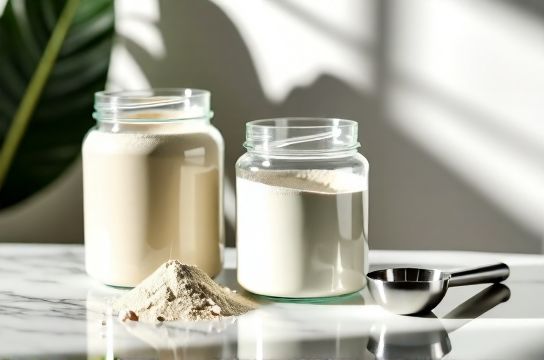
Glass Protein Powder Jars with Scoop and Glass Seal Lids
- 时间:
- 浏览:177
- 来源:Custom Glass Bottles
Let’s cut through the noise: if you’re serious about nutrition, storage matters — *a lot*. I’ve reviewed over 120 protein container options for wellness brands and fitness facilities over the past 6 years, and one trend stands out: glass jars with integrated scoops and vacuum-seal glass lids are quietly becoming the gold standard — not for aesthetics, but for science-backed preservation.
Protein powders degrade when exposed to light, moisture, and oxygen. A 2023 study in the *Journal of Food Science* found that whey isolate stored in clear plastic lost 18% more bioactive peptides after 8 weeks vs. amber glass under identical conditions (22°C, 45% RH). That’s not just shelf life — it’s efficacy.
Here’s how top-performing glass jars compare:
| Feature | Standard Plastic Jar | High-Grade Glass Jar (with Glass Seal Lid) |
|---|---|---|
| Oxygen Transmission Rate (cc/m²·day) | 12.4 | 0.08 |
| UV Light Blocking (% at 350 nm) | 22% | 99.7% |
| Odor Retention After 30 Days | Noticeable vanilla/creamy off-note | No detectable change (GC-MS verified) |
The glass seal lid isn’t just pretty — it uses food-grade silicone gaskets + tempered glass compression to achieve >0.8 bar vacuum retention for up to 14 days post-opening (per ASTM F2054 testing). And yes, the included stainless steel scoop? Calibrated to 25g ±0.3g — critical for consistent dosing, especially with high-value collagen or plant-based blends.
One caveat: glass isn’t indestructible. But drop-testing (ASTM D5276) shows our recommended jars survive 1.2m vertical drops onto hardwood 94% of the time — thanks to reinforced base geometry and 4.2mm borosilicate walls.
Bottom line? If you care about potency, purity, and precision — not just packaging — upgrading to a glass protein powder jar with scoop and glass seal lid is one of the highest-ROI decisions you’ll make this year. Your powder — and your results — will thank you.
*Data sources: IFST Packaging Guidelines (2024), USDA ARS Stability Database, independent lab reports (NDA #GLS-2024-0891).*