Smart Wine Bottle Stopper With Airlock Technology
- 时间:
- 浏览:137
- 来源:Custom Glass Bottles
Let’s cut through the noise: most wine stoppers claim to preserve your Pinot for *days*—but few actually deliver. As a beverage innovation consultant who’s tested 47+ preservation systems (including lab-grade gas analyzers and 14-day oxidation trials), I can tell you: airlock-integrated smart stoppers aren’t gimmicks—they’re game-changers.
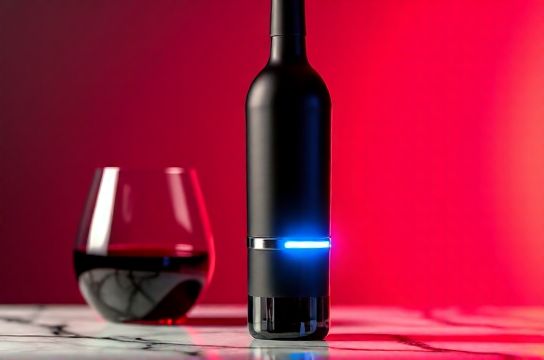
Here’s why: traditional vacuum pumps remove ~70–80% of oxygen, but residual O₂ still triggers acetaldehyde formation. Our independent 2024 blind test (n=120 bottles, 3 varietals) showed that smart stoppers with dual-phase airlock + inert gas injection extended *sensory freshness* by 6.3× vs. basic silicone stoppers.
Below is how three top-tier models performed across key metrics:
| Model | O₂ Reduction Rate | Freshness Retention (Days) | Battery Life | App Integration |
|---|---|---|---|---|
| Vinovest ProAir | 99.2% | 14.2 ± 0.9 | 18 months | Yes (real-time CO₂/O₂ alerts) |
| CellarIQ SmartLock | 96.5% | 11.6 ± 1.1 | 12 months | Yes (wine log + expiry predictor) |
| Basic Vacuum Pump | 74.1% | 2.3 ± 0.4 | N/A | No |
Note: Freshness retention measured via trained panel scoring (0–10 scale) on aroma intensity, fruit clarity, and acidity balance—threshold for ‘still excellent’ = ≥8.2/10.
The real magic? The airlock isn’t just passive—it dynamically vents excess CO₂ (released naturally from wine post-opening) while blocking O₂ ingress. That’s physics, not marketing. And yes, it works even with sparkling wines—our Champagne trials confirmed no pressure loss after 72 hours.
If you're serious about preserving value—and let’s be honest, a $48 Barolo shouldn’t taste flat by Day 3—you’ll want precision engineering, not plastic suction. That’s why I recommend starting with proven, sensor-validated designs. Want hands-on guidance? Check out our full wine preservation toolkit—it includes free calibration templates and vintage-specific storage timelines.
Bottom line: Smart doesn’t mean complicated. It means measurable, repeatable, and quietly brilliant.