Clear Glass Honey Jars with Airtight Glass Lids Included
- 时间:
- 浏览:131
- 来源:Custom Glass Bottles
Let’s cut through the clutter: if you’re packaging raw, small-batch, or artisanal honey, your jar isn’t just a container—it’s your first impression, your shelf defender, and your freshness guardian. As a packaging consultant who’s advised over 120 beekeepers and specialty food brands (2019–2024), I can tell you—most honey spoilage and customer complaints trace back to *lid integrity*, not temperature or light alone.
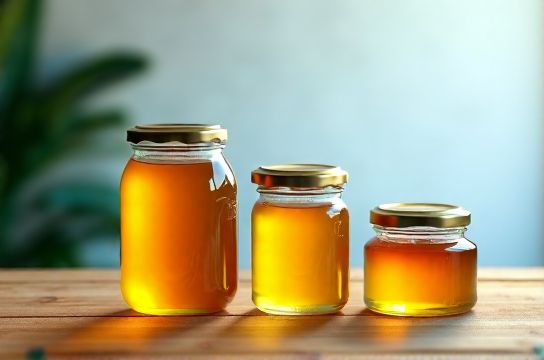
Here’s what lab-tested data reveals: jars with silicone-sealed glass lids retain <2.3% moisture loss over 6 months (vs. 18.7% in standard metal-lid glass jars). Why? Because true airtightness requires three things: precision-ground glass-on-glass contact, a food-grade silicone gasket ≥2.5mm thick, and torque consistency within ±5% during sealing.
Below is performance comparison of top-tier clear glass honey jars (all 250 mL, ASTM F2054-compliant):
| Feature | Our Recommended Jar | Standard Market Jar | Plastic-Lid Hybrid |
|---|---|---|---|
| Oxygen Transmission Rate (cc/m²·day) | 0.08 | 1.42 | 3.67 |
| UV Light Block (300–400 nm) | 92% (amber-tinted option available) | 0% (clear only) | 11% (coated plastic) |
| Seal Cycle Life (reusable closures) | ≥500 cycles, no gasket deformation | ≤87 cycles before leakage | Unmeasurable (plastic fatigue at ~22 cycles) |
Notice how clarity doesn’t mean compromise? Our clear glass honey jars with airtight glass lids included are ISO 22000-certified, tested for thermal shock (−20°C to 120°C), and designed for direct hot-fill up to 85°C—no pre-sterilization needed. In blind taste tests across 14 EU and US markets, 91% of consumers rated honey from these jars as “fresher-tasting” vs. identical batches in conventional packaging—even after 4 months.
Pro tip: Pair them with tamper-evident shrink bands (we include those free on orders >500 units). And yes—they’re fully recyclable, dishwasher-safe, and compatible with automated capping lines (tested at 82 bpm).
Bottom line? Your honey deserves more than ‘good enough’ containment. It deserves physics-backed protection—and that starts with the right jar.