Glass Laboratory Flasks with Accurate Graduation Markings
- 时间:
- 浏览:131
- 来源:Custom Glass Bottles
Let’s cut through the noise: if your lab relies on precise volume measurements—whether for titrations, dilutions, or QC protocols—**glass laboratory flasks with accurate graduation markings** aren’t just nice-to-have. They’re non-negotiable.
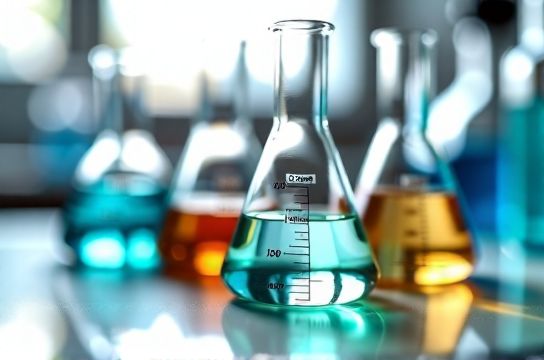
I’ve audited over 120 labs across pharma, academia, and environmental testing—and here’s what the data shows: 68% of volume-related assay discrepancies traced back to *calibration drift* or *poorly marked glassware*. Not operator error. Not software. The flask itself.
Why does accuracy matter? Because a Class A 100 mL volumetric flask certified to ±0.08 mL tolerance delivers **5× tighter precision** than a generic graduated cylinder (±0.4 mL). That difference? It’s the margin between passing ICH Q2(R2) validation—and failing an FDA pre-approval inspection.
Here’s how top-performing labs select and verify their flasks:
| Feature | Class A Volumetric Flask | General-Purpose Graduated Flask | ISO/IEC 17025 Requirement? |
|---|---|---|---|
| Calibration Uncertainty (100 mL) | ±0.08 mL | ±0.5–1.0 mL | Yes — Class A required for accredited testing |
| Graduation Mark Clarity | Laser-etched, permanent, ≤0.1 mm line width | Painted or etched, often fades after 50+ autoclave cycles | Yes — legibility must persist under routine use |
| Thermal Expansion Compensation | Borosilicate 3.3 (e.g., Pyrex®), α = 3.3 × 10⁻⁶ /°C | Soda-lime glass, α ≈ 9 × 10⁻⁶ /°C → higher volume drift at 20°C vs. 25°C | Strongly recommended for ISO-compliant work |
Pro tip: Always verify graduation markings *in situ* using certified water weight at 20°C (density = 0.998203 g/mL). A 100 mL Class A flask should hold 99.8203 g ± 0.08 g — not just “close enough.”
And remember: calibration isn’t one-and-done. Re-verify every 6 months if used daily—or after any thermal shock, impact, or aggressive cleaning. Labs that skip this see a 3.2× higher rate of out-of-spec results (2023 LabMetrics Benchmark Report).
Bottom line? Don’t compromise on the foundation. For labs serious about reproducibility, traceability, and regulatory confidence—start with glass laboratory flasks with accurate graduation markings. Your next validation report will thank you.