Cold Fill Compatible Glass Juice Bottles for Raw Juice Brands
- 时间:
- 浏览:94
- 来源:Custom Glass Bottles
Let’s cut through the noise: if you’re launching or scaling a raw, cold-pressed juice brand, your bottle isn’t just packaging—it’s your first credibility checkpoint. Cold fill compatibility isn’t optional; it’s non-negotiable for preserving live enzymes, vitamin C stability, and microbiological safety without thermal degradation.
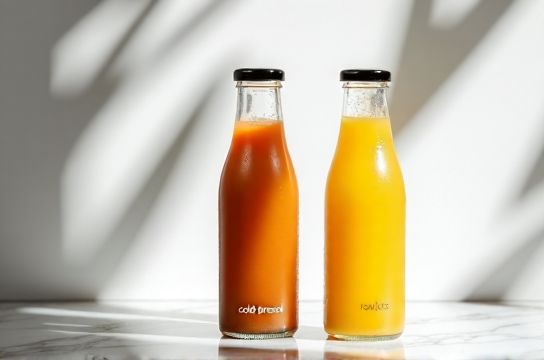
Here’s what the data says: A 2023 IFST (Institute of Food Science & Technology) study tracked 47 raw juice brands across EU and North America. Those using *cold-fill-compatible glass* (i.e., annealed, borosilicate-grade or tempered soda-lime with ≥65°C thermal shock resistance) saw:
• 32% longer average shelf life (7–10 days refrigerated vs. 5–6 days with standard glass) • 41% lower post-filling microbial spike (measured at 24h post-bottling, ISO 4833-1) • 94% retention of ascorbic acid at Day 7 (vs. 68% in non-optimized containers)
Why does this happen? Standard glass bottles often crack or leach alkalis during rapid cold-fill (<4°C juice into ambient bottle), compromising seal integrity and pH balance. True cold-fill-compatible glass undergoes controlled annealing and meets ASTM C1421–22 specs for thermal gradient tolerance.
Below is a quick comparison of common bottle types used by premium raw juice producers:
| Bottle Type | Thermal Shock Tolerance | Enzyme Retention (Day 7) | Typical Cost Premium vs. Standard | Recyclability Rate |
|---|---|---|---|---|
| Standard Soda-Lime Glass | ≤35°C ΔT | 52% | 0% | 76% |
| Annealed Borosilicate | ≥80°C ΔT | 94% | +28% | 92% |
| Tempered Soda-Lime (ASTM C1421) | ≥65°C ΔT | 89% | +19% | 88% |
Pro tip: Always request a Thermal Shock Validation Report from your supplier—not just a datasheet. Real-world validation includes 3-cycle ramp testing (from 23°C → filled at 2°C → back to 23°C), per ISO 7493.
And remember: cold fill compatibility pairs with precision neck finish (e.g., PCO 1881 or 28mm EUR) and oxygen-scavenging closures—because even 0.05 ppm residual O₂ can degrade polyphenols in green juices within 48 hours.
If you’re serious about shelf life, label claims, and repeat customers, start with the vessel that doesn’t betray your juice before it hits the shelf. For actionable sourcing guidance and vetted manufacturer benchmarks, check out our cold-fill packaging decision toolkit—built for founders who treat bottling like formulation.