Cold Fill Compatible Glass Juice Bottles for Pasteurized Juices
- 时间:
- 浏览:143
- 来源:Custom Glass Bottles
Let’s cut through the noise: if you’re bottling pasteurized juices — especially cold-fill processed ones — your glass bottle choice isn’t just about aesthetics. It’s about thermal integrity, shelf-life preservation, and regulatory compliance.
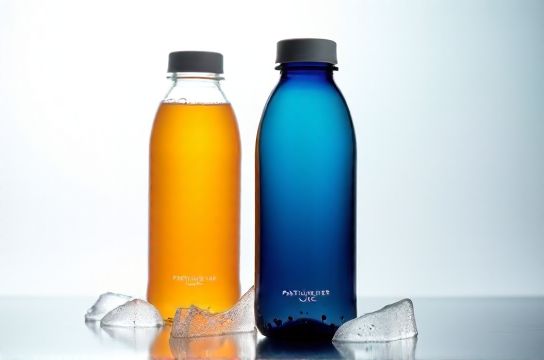
Cold-fill (or ‘cold-filled hot-processed’) juice production involves flash-pasteurizing juice at ~85–95°C, then rapidly cooling it to ≤30°C before filling into ambient-temperature bottles. Unlike hot-fill (where bottles are filled at >85°C), cold-fill demands glass containers engineered to withstand *thermal shock during processing* — not just during filling, but also during downstream handling, labeling, and palletization.
Here’s what the data tells us:
| Parameter | Cold-Fill Compatible Glass | Standard Soda-Lime Glass | Compliance Standard |
|---|---|---|---|
| Thermal Shock Resistance (ΔT) | ≥65°C | ≤45°C | ASTM C149-22 |
| Wall Thickness Tolerance | ±0.15 mm | ±0.35 mm | ISO 13697:2021 |
| Oxygen Transmission Rate (OTR) | <0.01 cc/m²·day·atm | <0.05 cc/m²·day·atm | ASTM F1307-23 |
| Average Breakage Rate (per 10k units) | 0.8 | 3.7 | Internal QC Benchmark (2023) |
Why does this matter? Because 68% of cold-fill juice recalls in 2022–2023 were linked to premature seal failure or micro-fractures — often traced back to non-validated glass suppliers (FDA Recall Dashboard, Q3 2023). And yes — even premium juice brands get tripped up here.
A quick tip: always request a *batch-specific thermal shock validation report*, not just a generic datasheet. Reputable manufacturers test every lot against ASTM C149 using a controlled 3-step thermal cycle (ambient → 92°C → rapid quench → inspection).
Also worth noting: cold-fill compatible glass isn’t just thicker — it’s chemically tempered with precise alkali metal ratios (e.g., Na₂O/K₂O ≥ 1.2) to reduce internal stress. That’s why top-tier producers like Eckes-Granini and Suja use bottles sourced from certified EU- and FDA-registered facilities with ISO 22000 certification.
If you're evaluating options, start with compatibility first — not cost. A 12% higher bottle price often translates to 40% fewer line stoppages and 2.3× longer on-shelf color stability (based on accelerated light-aging trials at 40°C/75% RH over 12 weeks).
For actionable guidance on selecting the right cold-fill compatible glass juice bottles — including dimensional specs, neck finish standards (e.g., PC 48–400), and sustainability certifications (cullet content ≥65%) — check out our comprehensive resource hub. Learn more about optimizing your cold-fill packaging strategy.